
By LocalAds.ie Editorial Team
Buying a Used Wardrobe: Measurements, Collection and Transport
Measure the wardrobe and its entire route, inspect its structure and plan a safe collection with this practical guide for Irish buyers.
Published 7 September 2026 - 11 min read
Buying a used wardrobe can deliver far better storage for the budget than buying new, especially when a solid piece has already proved durable. Its size and weight also make it one of the easiest second-hand purchases to misjudge. A wardrobe must fit the intended room, pass through every doorway and survive dismantling or transport. Confirm all three before making an offer.
Measure the space where it will stand
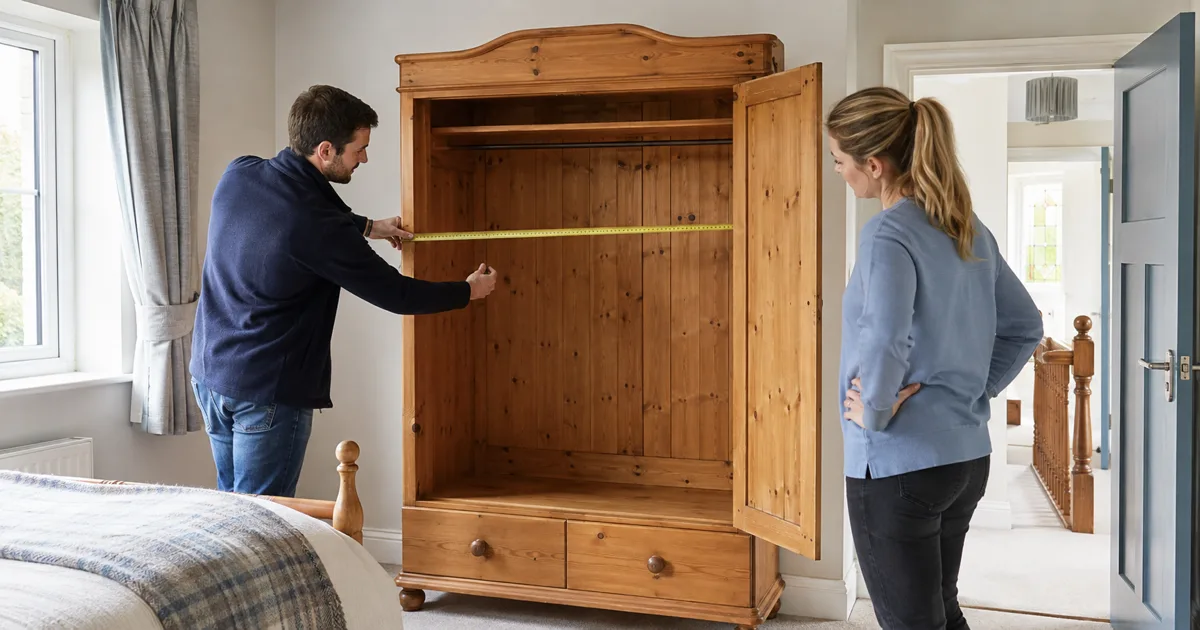
Measure the available width, height and depth at several points because floors, walls and ceilings may not be perfectly square. Include skirting boards, picture rails, sloping ceilings, sockets, radiators and window handles. Allow enough space to open doors and drawers fully without striking a bed or wall. Check that a tall wardrobe will not block ventilation or sit too close to a heat source.
Ask the seller for these exact dimensions
- Maximum external width, height and depth, including cornice, handles and feet.
- Body dimensions without genuinely removable trim or feet.
- Width of each door and the clearance needed to open it.
- Internal hanging height, shelf depth and drawer dimensions.
- Size and weight of each section if the wardrobe dismantles.
Measure the complete route
Work from the destination backwards to the vehicle: room door, landing, stairs, hall, building entrance, lift, gate and parking point. Record the narrowest width and height and the space available to turn. A wardrobe narrower than a doorway can still fail at a tight landing because its diagonal length cannot rotate. Repeat the same route check at the seller’s property and ask which floor it is on.
Do not rely on ‘it came in here somehow’. It may have arrived flat-packed, before a banister was fitted or through an opening no longer available. Ask whether the seller knows how it entered the room and whether it was assembled there. If access is uncertain, postpone the deal until the route is physically checked.
Identify how the wardrobe is constructed
Freestanding wardrobes may be solid timber, veneered board, flat-pack particleboard or several factory-built modules. Look inside, underneath and along exposed edges. Solid timber and well-made sectional furniture can often tolerate careful disassembly. Older glue joints and some lightweight flat-pack panels may not survive being taken apart repeatedly. Never promise dismantling until you have identified the fixings and assembly sequence.
Ask for the manufacturer, model and instructions where known. Confirm whether the top, base, doors, shelves, drawers, back panel and hanging rail detach. Check whether decorative cornices hide fixings. If the wardrobe must remain assembled, compare its rigid dimensions with the route and vehicle rather than hoping it will flex.
Inspect the structure before the finish
Stand back and check whether the body leans, twists or sags. Open and close every door and drawer. Gaps should remain reasonably even, hinges should hold their position and drawers should travel without falling from damaged runners. Inspect the base, feet, corners and rear panel for splits, swollen board, missing fasteners or rough repairs. A loose handle is minor; movement in the main carcass is not.
Use a torch to inspect shelves, drawer interiors, joints and the back. Look for water tide marks, mould, a persistent musty smell and small holes accompanied by fresh powder that may indicate active wood-boring insects. Check mirrors for cracks, failed backing and insecure clips. Do not buy a large item with suspected pests, significant damp or glass that cannot be secured for transport.
Check fittings and anti-tip requirements
Count shelves, pegs, rails, brackets, keys, handles and proprietary connectors. Confirm whether replacement parts are realistically available. Tall furniture can tip, particularly when doors or loaded drawers are open. Plan to use suitable anti-tip restraints for the wardrobe and wall construction at the destination, following the manufacturer’s instructions where available. Never assume its weight alone makes it stable.
Decide whether repair is worth it
Often manageable when priced honestly
- Surface scratches, faded finish or replaceable handles.
- A missing shelf that can be safely reproduced to the right thickness.
- Doors needing ordinary hinge adjustment on otherwise sound material.
- Minor drawer-runner wear with compatible replacements available.
Reasons to pause or walk away
- A twisted carcass, cracked load-bearing base or badly split joints.
- Severe moisture swelling, persistent mould or suspected active insects.
- A cracked mirror or glass panel that cannot be removed securely.
- Missing structural connectors or damage around hinge fixings.
- No measured route for a wardrobe that cannot be dismantled.
Photograph before dismantling
Take clear photographs of the assembled wardrobe, door alignment, hinge positions, shelf spacing, back-panel orientation and every connection. Label panels discreetly with removable tape if the finish allows it. Put screws, pegs and brackets for each stage into separate labelled bags. Do not mix similar-looking fasteners: one longer screw driven into the wrong panel can break through the finished face.
Remove loose shelves, drawers, rails and doors first, supporting each part as fixings are released. Use the correct hand tools and never force swollen dowels or glued joints. Large panels need two people even when they look light because twisting can split board or injure the carrier. If the construction or weight is unclear, use an experienced furniture mover.
Prepare the vehicle and lifting team
Confirm the longest panel fits inside a suitable vehicle with doors secured and the driver’s view unobstructed. Bring enough capable adults, moving blankets, edge protection, straps, a trolley suited to the route and protection from Irish rain. Wrap mirrors or glass separately and keep panels supported rather than stacking heavy objects on them. Secure the load against forward, sideways and upward movement before driving.
Agree parking, stairs and lifting help before collection. Wear footwear with good grip, clear the route and use deliberate team instructions. Do not carry an assembled wardrobe down stairs merely to save ten minutes, and do not exceed the vehicle’s capacity. Professional collection is part of the true purchase cost when the item cannot be moved safely by your group.
Calculate the real value
Compare wardrobes of similar size, material, condition and internal layout. Add van hire, fuel, tolls, movers, replacement fittings and any refinishing. A cheap wardrobe two counties away can cost more than a sound local option. Value also depends on whether all parts are present, dismantling is practical and the item fits without structural alteration to your home.
Confirm seller status and payment
Irish consumer protections differ between purchases from businesses and private individuals. Used goods sold by a business remain covered by consumer-law requirements, allowing for disclosed wear and age. Private purchases do not have the same protections, making inspection and written answers especially important. Ask whether the seller is acting as a business, and keep the advert and messages for a valuable purchase.
Inspect before paying and retain the right to decline if the measurements, condition or included parts differ materially. Never rely on a payment screenshot, and avoid unexpected courier links, insurance charges or release fees. Share an exact home address only after a genuine collection is agreed.
Final wardrobe collection checklist
- Match the wardrobe’s maximum dimensions to the room and both access routes.
- Test every door, drawer, hinge, rail and shelf support.
- Inspect the base, rear, joints, mirror and hidden surfaces.
- Confirm every removable part, fixing and key is included.
- Photograph and label the assembly before dismantling.
- Use enough lifting help, protect every panel and secure a suitable vehicle.
- Plan appropriate anti-tip restraint after reassembly.
- Pay only when the item matches the agreed description.
A used wardrobe is a successful purchase when it provides the right storage, remains structurally sound and reaches the destination without damage or unsafe improvisation. Precise measurements and a written transport plan are more useful than optimism at the bedroom door.
Tags
More from
New related stories are added frequently.