
By LocalAds.ie Editorial Team
Galway Student Guide: Furnishing Your Room for Less
A realistic plan for furnishing a Galway student room on a budget using what is included, borrowed essentials and carefully chosen second-hand items.
Published 6 September 2026 - 13 min read
A student room does not need to be finished on move-in day. In Galway, the cheapest sensible approach is to confirm what the accommodation already provides, borrow or bring a few essentials, and buy only the gaps that affect sleep, study, storage or comfort. Second-hand furniture can reduce costs, but a low asking price is useful only when the item fits the room, can be transported and is permitted by your accommodation agreement. This guide builds a practical room without treating decoration as an emergency.
Start with the inventory, not a shopping list
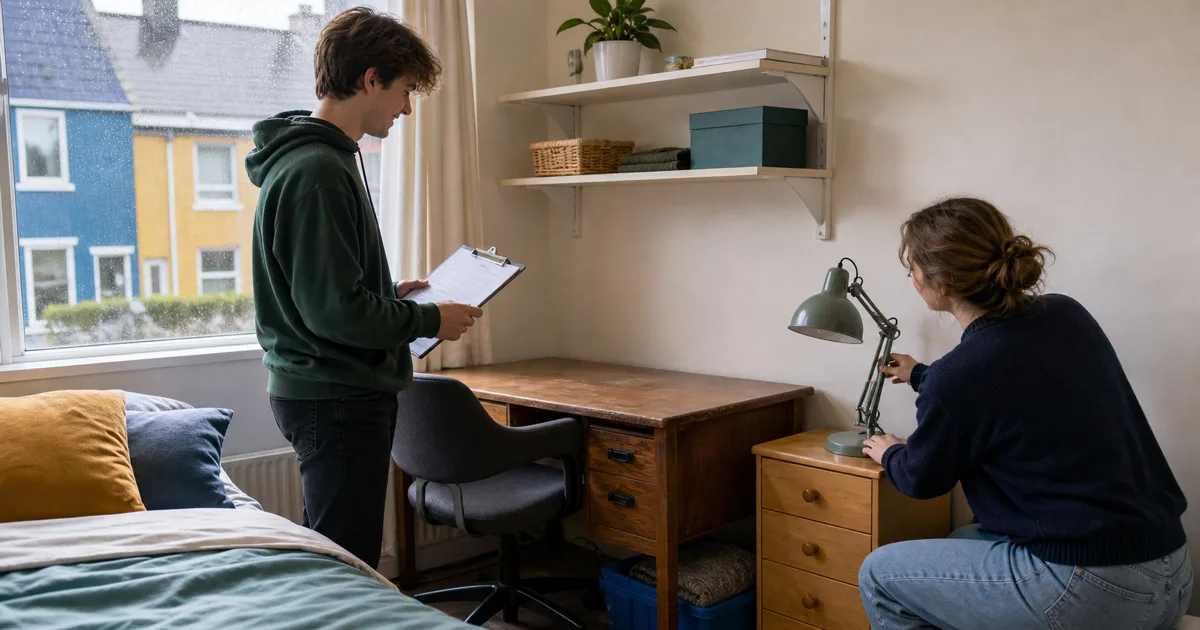
Ask for an inventory before buying anything and check it when you move in. University of Galway’s accommodation guidance tells students to make a list of furniture and appliances with the landlord, record outstanding repairs in writing and take photographs. Its Students’ Union also recommends noting existing damage and having the inventory agreed. This protects your deposit and prevents you buying a desk, chair or lamp that is already supplied.
Record on the first day
- Every supplied item and its visible condition.
- Existing marks, broken fittings, damp, unstable furniture or missing parts.
- Who is responsible for repairs and when agreed work should happen.
- Whether furniture may be moved, removed, replaced or added.
- Where supplied items must be kept and how the room should be returned.
Get permission before altering the room
Read the lease, licence or residence rules before drilling, attaching shelves, replacing supplied furniture or bringing in a large piece. The University of Galway Students’ Union guidance says a tenant should not alter or improve a dwelling without written consent from the landlord. Owner-occupied rooms and purpose-built student accommodation can operate under different agreements, so do not assume a friend’s rules apply to you. Use removable, non-damaging solutions only where your agreement allows them.
Set a room budget in three layers
Keep furnishing money separate from rent, deposit, food, transport, utilities and course costs. Divide the room into essentials, useful additions and decoration. Buy the first layer only after moving in; wait a week before deciding on the second; treat the third as optional. A realistic budget also includes bus fare, fuel, delivery, cleaning products and anything needed to repair or safely assemble a used item.
A sensible priority order
- Sleep: suitable bedding and any genuinely missing bed support agreed with the provider.
- Study: a stable desk or surface, supportive chair and working task light.
- Storage: only enough to solve an observed problem after unpacking.
- Comfort: a small rug, mirror or bedside unit if space and rules permit.
- Decoration: inexpensive, removable items that will travel home easily.
Bring, borrow and share before buying
Start with items already available at home: bedding, hangers, a laundry bag, a desk lamp or storage boxes. Coordinate with housemates before buying shared kitchen equipment, drying racks, cleaning tools or a router. Agree who owns each shared purchase and what happens at the end of the year. Splitting the cost without agreeing ownership can create a dispute when one person moves out early.
Where Galway students can look second-hand
Local classified adverts are useful for desks, office chairs, bedside lockers, mirrors, lamps and small shelving. Filter County Galway and search localities you can reach without an expensive collection. Students without a car should favour compact items near a practical walking, cycling or bus route and confirm dimensions before travelling. Search common alternatives such as desk chair and office chair, bedside table and locker, or shelves and bookcase.
Charity homeware shops can provide smaller furnishings and household items with fast-changing stock. Enable Ireland currently lists a dedicated Galway Homewares shop at 17 Eglington Street and says donated goods are refreshed frequently. That makes repeat browsing more useful than expecting one exact item to remain available. Confirm opening details and ask about holding or collection before making a special trip. Avoid assuming that any charity shop accepts or sells electrical items, mattresses or full-size furniture.
Search at the right time without panic-buying
Listings may increase when students move at the end of a term or tenancy, but a deadline can also hide problems. Save a precise search and check it regularly rather than responding to every cheap item. Ask outgoing housemates whether they are selling something that already fits the building. Never send a furniture deposit simply because a seller claims many people are waiting. The ability to inspect and collect safely matters more than being first to an uncertain advert.
Measure a small room accurately
Measure the floor space, but also mark the area needed to open the room door, wardrobe and drawers. Keep radiators, vents and escape routes clear. Check desk height against the chair and leave enough depth for comfortable study. Then measure the building entrance, stairs and lift. A cheap bookcase that blocks a socket or cannot turn on the staircase is not useful student furniture.
Ask the seller for
- Exact width, height and depth at the widest points.
- Clear photographs of the front, back, underside and any damage.
- Whether it dismantles and whether every fixing is included.
- The approximate collection area, floor, stairs, lift and parking access.
- Confirmation that you can inspect it before paying.
Choose a desk and chair for real study
A desk should be stable, deep enough for your normal materials and small enough to leave circulation space. Check for swollen board edges, loose legs and drawers that obstruct your knees. An office chair should adjust where advertised, roll or stand evenly and support you without a sinking seat or loose back. Sit in it before buying. Cosmetic wear is less important than a sound structure and a comfortable position you can maintain through a study session.
Be cautious with upholstered items and mattresses
Inspect fabric seams, folds, cushion undersides and the frame for pests, damp, smoke, staining and damage. Ask where the item was stored. A strong fragrance may make odours harder to judge. Mattresses are difficult to assess and dispose of, and many charity shops do not accept them. Check what your accommodation supplies before considering one, and do not bring any soft furnishing into a shared home if you see signs of pests or moisture.
Treat used electrical items as a separate decision
A desk lamp, monitor or small appliance needs more than a visual check. Confirm the model and plug, inspect the cable and casing, and ask to see the main functions working. Do not use equipment with exposed conductors, scorch marks, cracked plugs or improvised repairs. Check residence rules before bringing cooking, heating or high-load electrical devices into a bedroom. Saving money does not justify creating a fire or insurance risk.
Collect without owning a car
Prioritise pieces one person can carry safely or dismantle into manageable parts. Get a delivery quote before making an offer on bulky furniture, and ask whether the quote includes stairs, waiting and carrying inside. If a friend helps, protect the vehicle and secure every load properly. Never carry furniture on a bicycle or bus where it blocks movement or cannot be controlled. A slightly dearer item within walking distance may have the lower total cost.
Use a simple total-cost check
Add the asking price, travel or delivery, cleaning, missing parts and the realistic cost of repair. Divide that total by the months you expect to use the item, then consider whether it can be resold, donated or taken home. Avoid buying low-quality temporary storage that is likely to break during the first move. One sound desk that lasts through a course can cost less than replacing a fragile one each year.
Plan the end of term when you buy
Keep measurements, assembly instructions, spare fixings and a note of what you paid. Decide early whether each item will travel home, move to the next tenancy, be sold or be donated. Start advertising before the final weekend and be honest about collection deadlines. Close an advert as soon as an item is gone. Never abandon furniture beside bins or in a hallway; arrange a legitimate new owner, donation or disposal route.
Galway student room checklist
- Inventory and photograph everything supplied before buying replacements.
- Read the accommodation rules and get written permission for alterations.
- Buy sleep and study essentials before storage or decoration.
- Measure the room, doors, stairs and item—not just the empty floor.
- Inspect used furniture and electrical items before paying.
- Include transport, cleaning and end-of-term removal in the real cost.
- Agree ownership of shared purchases with housemates in writing.
The most affordable Galway student room is usually the one assembled gradually. Use the inventory, live in the space long enough to find the real gaps, and choose second-hand pieces that are safe, portable and useful. That leaves more of the student budget for costs that cannot be solved with a borrowed lamp or a well-chosen used desk.
Tags
More from
New related stories are added frequently.