
By LocalAds.ie Editorial Team
Buying and Selling Locally: A Safe Collection and Meetup Checklist
Plan a safer local handover with a suitable daytime location, a shared itinerary, item-specific testing, independently verified payment and a clear exit plan.
Published 7 September 2026 - 16 min read
Local collection gives a buyer the chance to inspect the actual item and lets a seller avoid packaging and courier uncertainty. It also brings two strangers, an item and a payment into the same place. A safer handover is planned before either person travels: the item and terms are confirmed, the location suits the test, someone else knows the plan and both parties can leave without pressure.
No checklist removes all risk, and circumstances differ. Use the controls that fit the value, size and category. A book can change hands at a busy public entrance; a wardrobe may require a home address, stairs and several capable adults; a car needs specialist ownership, insurance and roadworthiness checks. If a situation feels unsafe or materially differs from the agreement, prioritise leaving over completing the deal.
Confirm the transaction before choosing a place
Agree these details in marketplace messages
- Exact item, model, colour and meaningful identifier.
- Every included and missing component.
- Known faults, tests already completed and what the buyer may test.
- Agreed EUR price or the basis for a final offer after inspection.
- Date, arrival window and estimated duration.
- General meeting area and exact point shared at the appropriate time.
- Who will attend and who is collecting.
- Payment method and when the item will be released.
- Vehicle, tools, loading help and dismantling needed.
- What happens if either person is delayed or cancels.
Keep the advert and important answers together on the platform where possible. Do not send identity documents, banking credentials or a home address merely to appear trustworthy. Enough verification should support this transaction without creating a new privacy risk. A change in collector, payment method, location or price should be confirmed before the meeting continues.
Choose a public daytime location where practical
For portable goods, prefer a busy, well-lit public place during opening hours: outside a staffed library or community building, a populated café area or another location with legitimate footfall. Choose somewhere you know, with reliable mobile coverage, safe pedestrian access and a clear route away. A camera may be present in some locations, but do not assume surveillance guarantees safety or evidence.
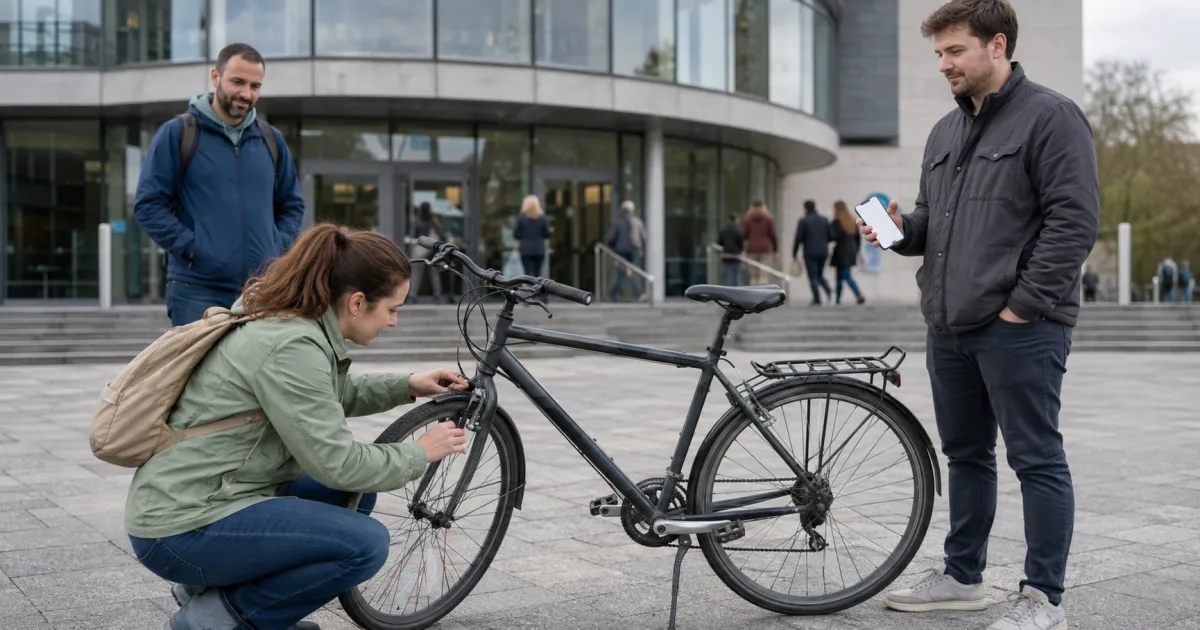
The location must also support a reasonable inspection. A phone may need Wi-Fi or signal; a small electrical item may require a suitable socket only with venue permission; a bicycle needs a safe stationary check and, if agreed, an appropriate test area. Never create a hazard, block an entrance, connect suspect electrical equipment or run a motor in an enclosed public space.
Share the plan with a trusted person
Tell someone the marketplace profile, listing, meeting point, time, expected finish and who is attending. Send updates when you arrive and leave. Where comfortable, share live location for the limited period and establish a check-in time. Bring another adult, particularly for a valuable item, an unfamiliar area or a home collection.
An Garda Síochána’s general advice for meeting someone first encountered online includes telling friends where you are going, sharing location, meeting in a public place first and calling 999 in an emergency. Apply those principles to classifieds without oversharing the other person’s data or treating a companion as a substitute for a suitable location and exit plan.
Protect addresses and personal information
An advert usually needs a county and useful general area, not a precise home address. Share an exact point privately only after the item, person, time and purpose are established. Remove family schedules, access codes, alarm details, documents, medication and valuable unrelated property from view. Do not let a stranger photograph mail, keys or the interior under the guise of inspecting an item.
Buyers also need privacy. A seller rarely needs a passport, driving licence, utility bill or bank statement for an ordinary used item. High-value or regulated categories can require appropriate identity or ownership evidence, but use a recognised process and expose only necessary fields. Never hand a phone to someone while an unlocked banking or marketplace account is open.
Home collection is sometimes necessary
A sofa, appliance or wardrobe cannot sensibly meet at a café. For home collection, arrange daylight, have another adult present and limit access to the route and room needed. Move unrelated valuables and private paperwork. Keep pets and children safely separate from lifting activity and open doors only for the named number of collectors and suitable vehicle you expected.
Give accurate access information in advance: floor, lift, steps, doorway width, parking restrictions, dismantled dimensions and whether the seller can help. Agree who brings tools, blankets, straps and lifting equipment. Do not rely on one person to move an object beyond their ability, and stop if the proposed method risks injury or property damage. A lower sale price is not worth an unsafe lift.
Arrive without exposing unnecessary value
Bring only the cash, device, keys and documents required for this transaction. Keep bags closed and unrelated purchases out of sight. Park legally in a position that does not trap another vehicle or require loading in traffic. Buyers should avoid announcing a large cash amount; sellers should not display proceeds from earlier collections.
Charge your phone, keep emergency contacts available and know the route home. Weather and fading light can make a previously suitable place unsafe for inspection or loading. Reschedule instead of rushing through rain, darkness, poor visibility or a location that has unexpectedly closed.
Check that the person and item match the plan
Meet at the exact agreed point and compare the item with the advert before moving elsewhere. Confirm the model, colour, included parts and collector name. A companion or replacement collector is not automatically suspicious, but an unexplained change should pause the handover. Do not follow a stranger to a second isolated place because the item is supposedly nearby.
Inspect ownership evidence appropriate to the item without publishing or retaining more personal data than necessary. For bicycles, tools and electronics, altered or missing identifiers, inconsistent history or account locks deserve caution. For valuable specialist goods, arrange professional authentication rather than depending on a profile, receipt photograph or plausible story.
Inspect before final payment
Use the agreed category-specific test while the seller remains present. Check the actual model, condition, faults and contents against the advert. Keep testing proportionate and safe: do not open sealed electrical assemblies, install unknown software, exceed a device’s normal use or damage the seller’s property. Ask permission before connecting, dismantling or inserting personal media.
The Competition and Consumer Protection Commission advises examining second-hand items for faults, imperfections and wear and asking about history and condition. It also explains that consumer rights differ between a business and a private seller. Confirm seller status; an inspection does not remove a trader’s obligations, and negotiation does not create business protections in an ordinary private sale.
Plan test rides and vehicles separately
A bicycle test should take place only in a suitable area, with an appropriate fit, safe equipment and agreed control of keys or another item—not an identity document casually retained as leverage. Inspect brakes, tyres, frame and steering while stationary first. The buyer accepts ordinary riding risk and should stop if the bicycle is unsafe or unsuitable.
Motor vehicles require specialist checks beyond a general meetup. Verify ownership, registration, history, roadworthiness and finance where relevant. Confirm that any driver is legally licensed and insured for the test and that the seller controls the route and keys appropriately. Never improvise a road test because a stranger applies pressure.
Agree the final price without doorstep pressure
If the item matches the advert, use the agreed price or negotiate respectfully from new evidence. A buyer arriving with less cash is changing the proposal; the seller can decline. A seller raising the price after accepting terms is also changing the deal. Normal disclosed wear is not a new defect, and travel time does not oblige either side to complete.
Keep voices calm, maintain physical space and end circular bargaining. Do not block a person, vehicle or exit, hold their property, threaten a bad review or summon extra people to apply pressure. A clear ‘No, I am ending the transaction’ is enough. Move towards staff, other people or a safe place if necessary.
Verify electronic payment independently
A seller should check their own trusted banking or payment application and confirm the expected amount and status before releasing the item. A screenshot, email, text, pending animation or screen on the buyer’s device is not confirmation. A seller does not need to click a buyer’s link, provide a PIN or one-time code, upgrade an account or pay courier insurance to receive ordinary payment.
The buyer should confirm the recipient and amount before authorising. Type or select details carefully rather than copying from an unexpected link. For unexplained overpayment, do not send a separate refund at the other person’s instruction; contact the relevant provider through official details. Payment uncertainty means the transaction pauses, not that the item leaves as a gesture of trust.
Handle cash deliberately
If cash is agreed, meet in an appropriate place, bring the exact or expected amount and count it discreetly before handover. Do not accept damaged or questionable notes without resolving the issue. Avoid displaying a wallet or carrying proceeds between several advertised collections. High-value deals may justify a more suitable documented method agreed with the relevant provider.
Use a simple receipt for meaningful value
A receipt can record the date, agreed amount, item and useful identifier, included parts, known disclosed faults and both parties’ acknowledgement as appropriate. Keep it proportionate and private. Do not publish signatures, addresses or full serial numbers. A receipt supports the record of what happened; it does not authenticate stolen goods, waive mandatory consumer rights or make an unsafe item safe.
Complete the physical handover safely
Transfer keys, chargers, parts and documents only after inspection and verified payment. Count bundle components. Protect furniture in the vehicle, secure loads correctly and keep appliances in the transport orientation recommended for the exact product. The seller should not ride with an unknown buyer or enter their vehicle simply to help finish collection.
Before separating, both sides should check the area for phones, wallets, tools and loose parts. Mark the advert sold only when the transaction is genuinely complete. Keep the relevant listing, messages, receipt and payment reference for an appropriate period without retaining unnecessary personal data.
Changes and no-shows
Use a short arrival window and message through the agreed channel if delayed. Do not wait indefinitely in an isolated place. A late change from daylight to night, public to private, one attendee to several or collection to courier deserves a fresh safety decision. Reschedule or cancel without arguing if the new plan is unsuitable.
Do not travel to an alternative address received from an unfamiliar number without verifying it in the platform conversation. Sellers should not reveal repeated periods when their home is empty. After a no-show, close the arrangement and choose a new plan rather than leaving an address and open invitation active.
Extra safeguards for young or vulnerable users
A minor should not arrange or attend a stranger transaction alone; a responsible adult should manage it. Anyone who feels pressured, has accessibility needs or is handling an unusually valuable item should bring appropriate support and select an accessible staffed location. Build more time into the plan so safety checks are not rushed.
Leave immediately when the situation changes
End the meetup if
- The item, person, collector or location does not match the written plan.
- Someone tries to move the meeting to an isolated second location.
- Inspection is refused or a serious undisclosed fault appears.
- Payment requires a link, code, fee, refund or remote access.
- More people arrive than expected and their behaviour creates concern.
- Someone blocks movement, holds property or becomes threatening.
- Unsafe testing, lifting, driving or loading is demanded.
- You simply feel unsafe and cannot resolve why.
Move towards staff, other people or a secure location. Do not remain to protect a bargain or avoid seeming rude. In an emergency or immediate danger in Ireland, call 999 or 112. Give the location, nature of the danger and useful description, then follow the call handler’s instructions.
After a suspicious or harmful encounter
Preserve the advert, profile, messages, agreed location, vehicle details observed lawfully, payment records and a factual timeline. Report the account or listing to the platform. Report suspected fraud or an incident to your local Garda station; use 999 or 112 for an emergency. If banking or card information was exposed, contact the provider immediately through official details.
Buyer’s local meetup checklist
- Listing, seller status, item and contents are confirmed in messages.
- Price ceiling includes collection, parts and repair uncertainty.
- Daytime public location supports the required inspection where practical.
- Trusted person has the listing, time, place and check-in plan.
- Phone is charged and route home is known.
- Actual item matches the advert before moving or paying.
- Category-specific inspection is completed safely.
- Recipient and amount are checked independently.
- Receipt and included parts are complete.
- Buyer leaves if pressure or material facts change.
Seller’s local meetup checklist
- Buyer, collector, price, time and test are agreed in messages.
- Public location is used unless the item genuinely requires home collection.
- Another adult knows the plan or attends.
- Home access is limited and unrelated valuables are removed.
- Tools, vehicle, lifting and dismantling requirements are explicit.
- Seller keeps control of item, keys and devices during inspection.
- Payment is confirmed in the seller’s own trusted account.
- No buyer link, code, upgrade fee or overpayment refund is accepted.
- All components transfer only after the deal completes.
- Advert status and records are updated afterwards.
A good local transaction should feel ordinary: the place is appropriate, the item matches, the test is sensible, the price is understood and payment can be verified without a special link or urgent favour. Plan for that ordinary sequence, let someone else know it and give yourself permission to leave. The safest bargain is one that still makes sense after every fact and term has been checked.
Tags
More from
New related stories are added frequently.