
By LocalAds.ie Editorial Team
Second-Hand Dining Tables and Chairs: A Buyer’s Checklist
Measure, inspect and value a used dining set with this practical checklist for Irish buyers, from loose joints and extension leaves to safe collection.
Published 7 September 2026 - 11 min read
Second-hand dining tables and chairs can offer excellent value because solid furniture often outlasts changes in fashion. The challenge is that a polished tabletop can distract from loose chair joints, missing extension parts or a set that simply overwhelms the room. Before paying, confirm the dimensions, inspect every structural component and calculate what collection or repair will really cost.
Measure the room for people, not just furniture
Measure the available floor area and mark the proposed tabletop outline at home. Then allow space for chairs to pull out and for somebody to walk behind a seated person. A compact table may still feel cramped when chairs, a radiator, door swing or sideboard are included. If the table extends, plan around its largest usable size rather than the photograph of it closed.
Dimensions to request before travelling
- Length, width and height with the table closed.
- Full length with every extension leaf fitted.
- Distance between legs or pedestal supports where chairs must fit.
- Chair width, depth and seat height, including arms where present.
- Dimensions of removable parts and the narrowest collection doorway or stair turn.
Check your entrance, hallway, lift, stairs and corners as carefully as the dining room. Ask whether the legs or top detach and what tool is needed. Do not assume a table can be dismantled because bolts are visible; some frames depend on glued joints, and forcing them apart can permanently weaken the structure.
Confirm exactly what the advert includes
Count the chairs in the description and photographs, and ask whether cushions, extension leaves, clips, bolts and storage bags are included. Confirm whether every chair genuinely matches. Replacement chairs with similar colour can differ in height or construction, while an extension leaf stored elsewhere may have faded differently from the main top. Ask for current photographs of the actual set rather than relying on catalogue images.
Useful questions cover age, maker, material, repairs, storage, water damage, woodworm, pets and the reason for sale. Ask whether the table has ever been refinished and whether marks shown as removable are stains, heat damage or scratches. Keep meaningful answers in direct messages so the condition can be checked at collection.
Identify the materials and construction
Solid timber, veneer, plywood, fibreboard, glass and metal each wear differently. A veneer is not automatically poor quality, but sanding through its thin surface can ruin it. Swollen fibreboard around an edge usually indicates moisture and may not return to shape. On glass tables, look for chips at edges and fixing points; do not buy a top with cracks or uncertain safety glass. Check metal frames for distortion, failed welds and active rust.
Test the table for movement
Place the table on a level surface if possible. Press gently near each corner and watch the joints rather than accepting a folded piece of cardboard under a short leg as the complete explanation. Examine where legs meet rails or the pedestal meets the top. Loose bolts may be simple to tighten; split timber, enlarged screw holes, separated glue joints or a twisted base require more work and should affect the price.
Sight along the tabletop from a low angle for bowing, cupping or a centre sag. Inspect underneath for cracks, stains, extra screw holes and rough repairs. A cosmetic surface mark can be lived with; movement in the load-bearing frame is more important. Never climb on or overload furniture as a test.
Open and close every extension
Ask the seller to demonstrate the extension mechanism fully. Slides should move without violent force, leaves should sit reasonably level and locks or clips should engage. Check that fingers can stay clear of pinch points. Compare colour and thickness across the joined surfaces, and confirm how separate leaves will be protected and stored. Missing proprietary runners or fittings can be difficult to replace even when the tabletop looks excellent.
Inspect every chair individually
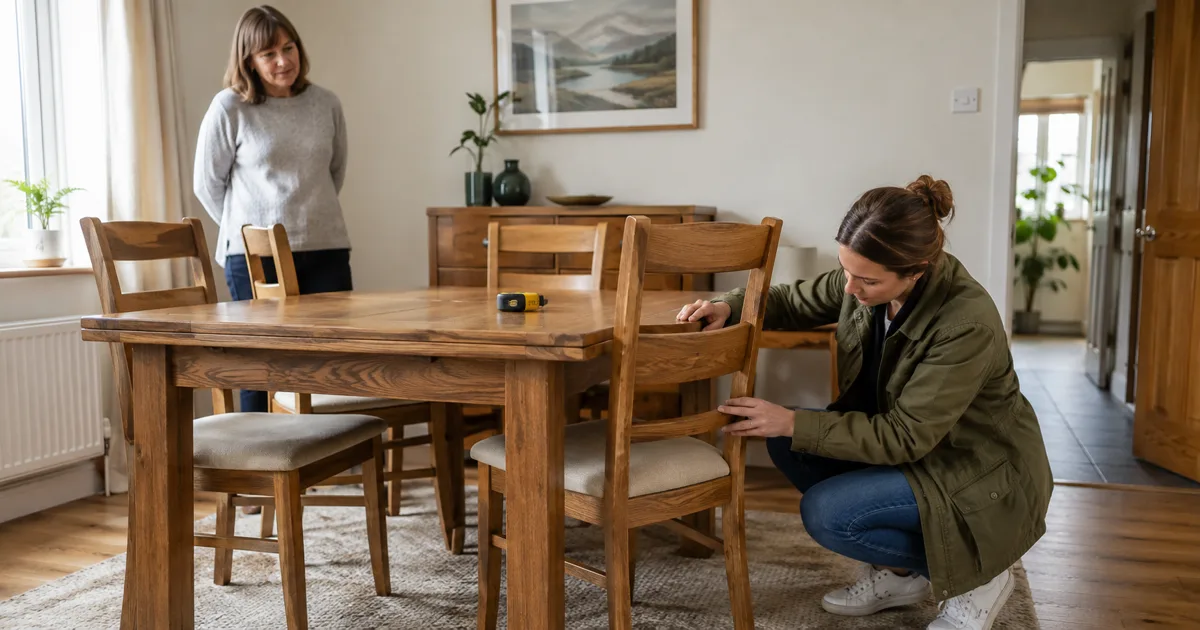
A dining set is only as useful as its weakest chair. Put each chair on the same hard, level floor and check for rocking. Hold the seat while applying gentle pressure to the back; movement where the legs, rails or back meet can reveal loose joints. Look underneath for splits, missing corner blocks, protruding fasteners, fresh glue or improvised brackets. Sit normally on each chair, but do not lean back on two legs or stress a visibly damaged frame.
For upholstered seats, inspect fabric, seams, foam and the underside. Ask whether covers remove and read the care information before planning to wash them. Persistent damp or smoke odours, mould signs, unexplained insect activity or contaminated foam are sensible reasons to decline. Reupholstery can transform sound chairs, but price the fabric, foam and labour before calling the set a bargain.
Separate cosmetic wear from expensive faults
Usually easier to accept or improve
- Light surface scratches, small finish marks and ordinary edge wear.
- Replaceable floor protectors or missing felt pads.
- Tired removable seat fabric on otherwise solid chairs.
- Minor colour variation that is honestly shown and suits your room.
Potentially costly or unsafe
- Split legs, moving structural joints or a badly distorted frame.
- A cracked or chipped glass top, especially near mounts or edges.
- Severe water swelling, active wood-boring insect signs or persistent mould.
- A failed extension mechanism or missing parts unique to the model.
- Protruding screws, sharp repairs or chairs that cannot support normal use securely.
Compare the complete cost
Compare sets of similar size, material, construction, condition and chair count. Do not anchor on a claimed original retail price. Add fuel, van hire, tolls, parking, moving help, cleaning and likely repair materials. A table sold without chairs may be good value only if suitable chairs can fit between its legs. Equally, a slightly higher price for a complete, stable set nearby can be cheaper than assembling mismatched pieces from several counties.
Know whether the seller is a business or private person
Irish consumer protections depend on the seller’s status. Second-hand goods bought from a business must meet consumer-law requirements, allowing for their used condition and faults disclosed before sale. A trader cannot avoid those duties by presenting a commercial sale as private. A purchase from another private individual does not carry the same consumer protections, so careful inspection and an accurate written description are particularly important.
Plan a safe collection
Confirm the floor, stairs, parking distance and lifting help before agreeing a time. Bring a suitable vehicle, enough capable adults, blankets, straps and the correct hand tools. Photograph connections before dismantling and place labelled fixings in a sealed bag. Protect leaves and tabletops separately, secure every load and keep the driver’s view clear. Use professional movers when weight, glass, stairs or access make self-collection unsafe.
Final check before payment
- Recount every chair, leaf, fixing and accessory agreed in messages.
- Measure the set and confirm it can pass through both properties.
- Check the table, extension system and every chair for stability.
- Inspect upper and hidden surfaces in good light and note all faults.
- Agree the final price and loading plan without pressure.
- Verify electronic funds in the receiving account, never through a screenshot or unexpected link.
The best second-hand dining set is not necessarily flawless. It is correctly sized, structurally dependable, accurately described and fairly priced after transport and repairs. A systematic inspection lets normal wear remain part of the furniture’s character without allowing a hidden fault to become your problem.
Tags
More from
New related stories are added frequently.