
By Local Ads Editorial Team · Irish Marketplace Guides
Free Stuff in Ireland: How to Give Away and Collect Items Safely
A practical guide to giving away usable items and arranging free local collections without creating unnecessary safety or privacy risks.
Published 16 August 2026 · Reviewed 20 August 2026 · 10 min read
Giving an item away can extend its useful life and clear space quickly, but a zero price does not remove the need for an accurate description or a controlled handover. Free listings often attract rapid responses, including people who have not checked size, condition or transport. The giver should disclose faults and choose a fair collection process; the collector should verify suitability before travelling. This guide focuses on usable household goods. Unsafe products, waste and items subject to resale restrictions need an appropriate disposal or specialist route instead.
Decide whether the item is genuinely reusable
Free should mean useful, not a way to transfer disposal responsibility. Test the item where possible and inspect it for mould, infestation, structural damage, exposed wiring, missing safety parts or contamination. Be especially cautious with child safety products, protective equipment, gas appliances, electrical goods and upholstered furniture. If safe reuse is uncertain, contact an appropriate recycling or waste service. A collector is entitled to know the real condition even when no money changes hands.
Do not give away blindly
- Describe all known defects and whether the item has been tested.
- Check current safety or recall information for sensitive product types.
- Remove personal data and accounts from electronic devices.
- Do not label waste, broken glass or hazardous material as reusable goods.
- Use an authorised disposal route when the item is not fit for another owner.
Write dimensions and collection facts prominently
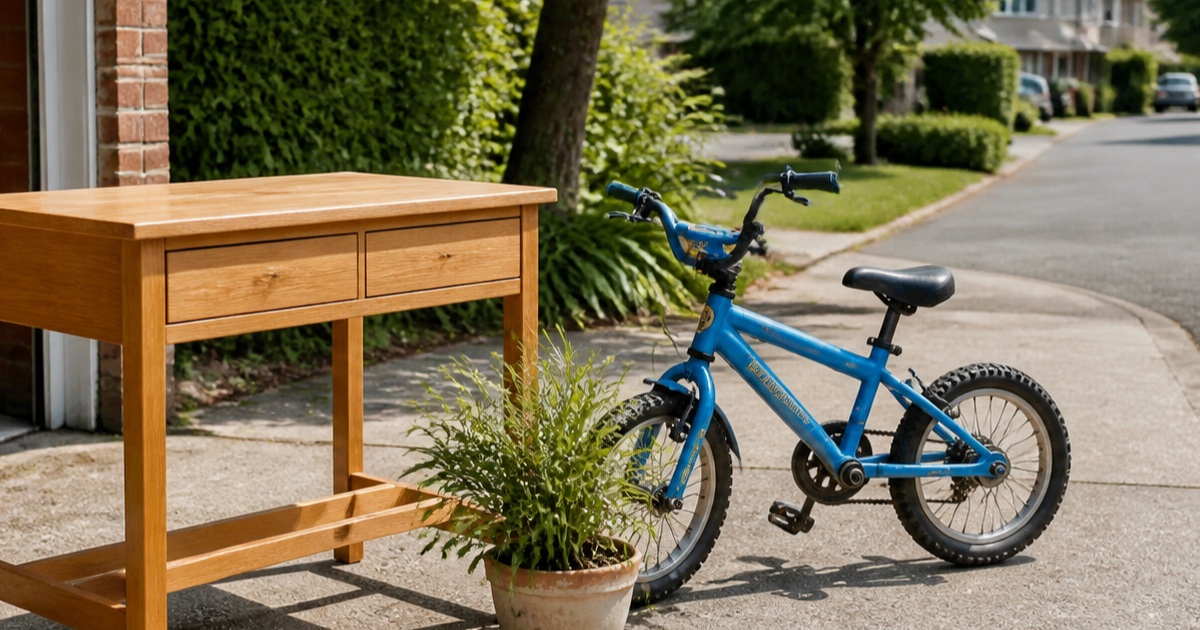
Many failed free collections happen because the item does not fit the collector's vehicle, doorway or intended space. Put dimensions near the top of the description and explain floor level, lift access, dismantling status and lifting weight. State whether the collector must bring tools or another adult. Photograph the complete item and damage. Avoid a vague curb alert that publishes an address and invites several strangers to race for the same object.
Essential free-ad details
- Width, depth and height in centimetres.
- Approximate weight or a clear warning when two people are needed.
- Whether the item dismantles and which tools are required.
- General locality and realistic collection times.
- Known faults, missing parts and cleaning required.
Choose a fair response policy
First message is not always the fairest or most reliable rule, but changing the rule silently creates conflict. You might offer the item to the first person who confirms dimensions, transport and a collection time. Alternatively, set a response window and choose a suitable collector. Avoid long unpaid holds unless the person communicates clearly. Tell later enquirers the item is pending rather than sending the private address to multiple people.
A workable handover queue
- Ask the collector to confirm they read the dimensions and condition.
- Agree one collection slot and one backup person.
- Set a clear expiry for the hold if messages stop.
- Never request a deposit for an item advertised as free.
- Mark the listing unavailable as soon as collection is complete.
Protect the collection location
Share a precise address only after choosing the collector. Portable goods can be handed over at a suitable public location. For bulky home collections, have the item accessible without revealing unrelated rooms or possessions and consider having another adult present. Do not leave valuable-looking goods unattended with a public address. If the collector arrives with unsuitable transport or behaves in a way that makes you uncomfortable, postpone or cancel the handover.
Privacy and safety basics
- Keep house numbers, family routines and absence dates out of the ad.
- Use daylight collection when possible.
- Do not allow unsafe lifting that could damage people or property.
- Keep pets and children away from the loading area.
- End the arrangement if the agreed person or vehicle changes unexpectedly.
Collect free goods with the same care as a purchase
A free item can still create transport, repair and disposal costs. Read the description, measure your space and ask whether key functions can be checked. Bring appropriate straps, blankets, tools and lifting help. Do not pressure the giver to deliver or provide extras that were not advertised. Inspect before loading; accepting an unsuitable item simply moves the clutter and may create a disposal problem. Free collection should be respectful, punctual and complete.
Before saying yes
- Confirm the item solves a real need rather than reacting to zero price.
- Check dimensions against the room, doorway and vehicle.
- Estimate repair, cleaning and missing-part costs.
- Arrange enough people and safe equipment for lifting.
- Tell the giver promptly if you cannot attend.
The practical takeaway
The best free exchange is uneventful: the item is accurately described, the right collector arrives prepared, and the handover respects both homes and schedules. Zero price is not permission to hide damage, ignore messages or take avoidable risks. When the item is genuinely reusable, a careful local handover can save money, reduce waste and give it a useful next chapter.
Tags
More from Buyer safety
7 min read
Buying and Selling Second-Hand Baby Items in Ireland: A Safety Guide
A careful guide to listing and buying used prams, cots, highchairs, toys and baby equipment in Ireland, with safety-first checks.
 Buyer safety
10 min read
How to choose a local tradesperson in Ireland
Compare qualifications, references, written quotes, insurance and payment stages before hiring someone for work in your home.
 Buyer safety
10 min read
How to check a used laptop before buying in Ireland
Inspect battery health, accounts, storage, ports and physical condition with this practical checklist before paying for a second-hand laptop.