
By Local Ads Editorial Team · Irish Marketplace Guides
How to Sell Second-Hand Items Online in Ireland
A step-by-step Irish seller guide covering preparation, photography, pricing, enquiries, collection and safer offline payment.
Published 19 August 2026 · Reviewed 20 August 2026 · 11 min read
Selling a used item online is not mainly a writing exercise. It is a preparation and trust exercise. The strongest listing answers the questions a reasonable buyer would ask, proves condition through original photographs and sets a price supported by comparable local ads. That reduces repetitive messages and makes collection easier. This guide applies to everyday private sales across Ireland, from furniture and electronics to bicycles and garden equipment. Businesses and regulated categories may have additional obligations, so always use the correct seller type and category rather than presenting commercial activity as an occasional private sale.
Prepare and test the item first
Clean does not mean disguise. Remove ordinary dust, empty drawers, charge batteries and gather every component included in the sale. Then test the functions you intend to claim. Record faults honestly, including intermittent problems, cosmetic damage and parts that are absent. If you cannot test something, say so. Preparation also reveals model numbers, dimensions and specifications that improve search relevance. For devices, sign out, remove personal data and perform the appropriate reset only after saving anything you need.
Before taking photographs
- Test normal functions and note exactly what works and what does not.
- Find the model, size, capacity or other identifiers buyers search for.
- Gather chargers, keys, manuals, receipts and accessories included in the price.
- Remove personal data, account locks and saved addresses from connected devices.
- Measure bulky items and plan how a buyer could collect them safely.
Photograph proof, not perfection
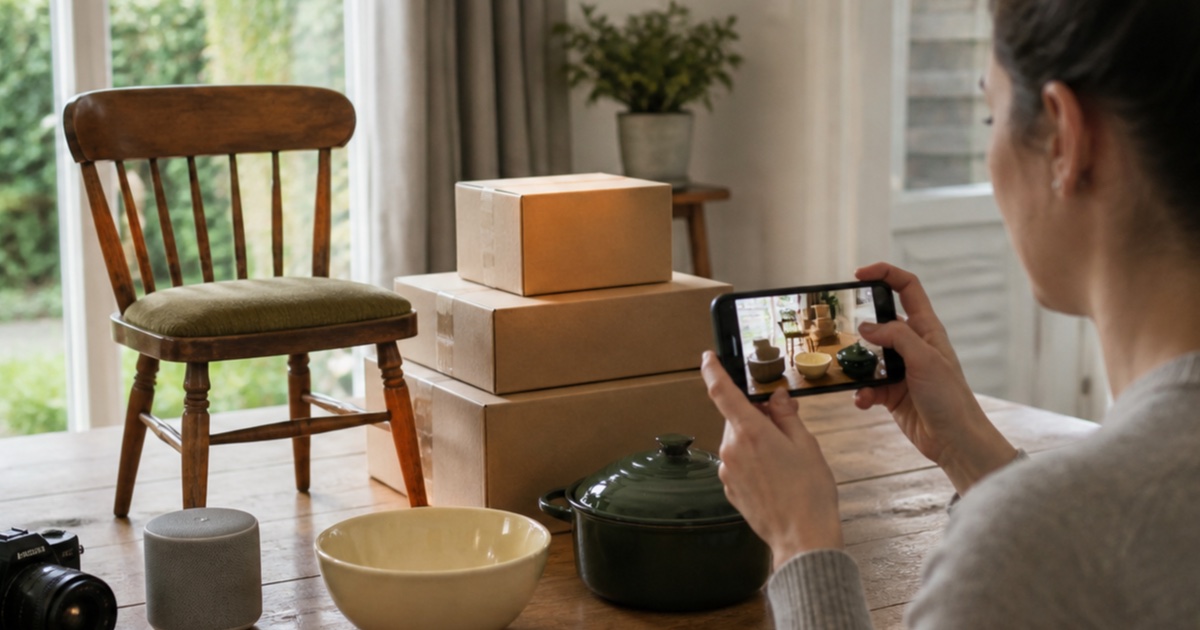
Use daylight, a simple background and enough distance to show the whole item without distortion. Start with a clean cover image, then add close-ups of labels, controls, accessories and wear. Photograph damage directly rather than hiding it outside the frame. Buyers understand that used goods have signs of use; unexplained surprises cause more problems than visible scratches. Avoid screenshots from a manufacturer or another seller because they cannot prove the condition or ownership of the actual item.
A useful photo sequence
- Front or three-quarter view showing the complete item.
- Rear, sides and underside where condition matters.
- Model label or specification plate with private serial details obscured if needed.
- Included accessories arranged clearly in one frame.
- Close-up photographs of every notable mark, repair or missing piece.
Write a title and description people can verify
Lead with the ordinary product name, brand or type, model and one decisive attribute. The description should then cover ownership, age, tested condition, faults, included parts and collection arrangements. Use short paragraphs and factual language. Keyword repetition does not improve a weak ad; precise details help both search engines and buyers understand it. Do not claim an item is new when it has been used, or perfect when a defect exists. If a receipt or warranty is transferable, explain what documentation is available without publishing private information.
Description order
- One-sentence summary of the exact item and present condition.
- Reason for sale and approximate ownership history where useful.
- Tested functions, known faults and meaningful signs of wear.
- Accessories, dimensions and compatibility details.
- General collection area and any practical lifting or transport requirement.
Price from evidence and decide your negotiation limit
Search for the same or closely comparable item in similar condition. New retail prices provide context but do not determine second-hand value, especially when a newer model has replaced yours. Consider age, warranty, demand, completeness and the cost a buyer will bear to collect or repair it. Decide the lowest figure you would genuinely accept before enquiries arrive. A realistic asking price can include a modest negotiation margin, but an inflated figure often prevents the serious buyers you want from opening the ad.
What moves the price
- Current demand in your county and the number of close alternatives.
- Documented working condition and recent service or replacement parts.
- Completeness, original accessories and transferable proof of purchase.
- Visible damage, unknown faults or expensive missing components.
- Collection difficulty, urgency and seasonal timing.
Manage messages, collection and payment calmly
Reply with the same facts to every genuine enquirer and keep promises about holds explicit. Do not click links sent by a supposed buyer to receive money, arrange a courier or verify your Local Ads account. Local Ads does not hold buyer funds or provide escrow for classified transactions. Agree an offline payment method you understand, allow inspection, and confirm receipt of funds yourself before handing over the item. For home collections, avoid exposing more of the property than necessary and consider having another adult present.
A safer handover
- Confirm the final price and what is included in writing.
- Use a suitable public location for portable goods when practical.
- Never rely on a screenshot as evidence that payment arrived.
- Provide a simple receipt for valuable items and retain your copy.
- Mark the ad unavailable promptly so later buyers do not waste time.
The practical takeaway
The quickest route to a good sale is not hype. It is removing uncertainty. Test the item, show the evidence, price against comparable goods and state the collection terms before the buyer travels. A clear listing may receive fewer vague messages than an exaggerated one, but the enquiries should be more relevant. Update or close the ad when circumstances change, and never conceal a fault simply to protect the asking price.
Tags
More from Seller guides
7 min read
How to Sell a Car Privately in Ireland: A Complete Seller Guide
Learn how to prepare, photograph, price and hand over a used car privately in Ireland with a clearer advert and fewer wasted enquiries.
6 min read
How to Sell Used Furniture in Ireland: Photos, Prices and Collection
A detailed guide to selling sofas, tables, wardrobes and home furniture locally in Ireland, including measurements and collection planning.
7 min read
How to Sell Used Electronics Safely in Ireland
Prepare phones, laptops, cameras and games consoles for a better Irish marketplace listing, with privacy, testing and handover advice.