
By Local Ads Editorial Team
How to Sell a Used Boat and Marine Equipment in Ireland
Prepare a boat listing with accurate identity, engine and trailer details, maintenance evidence, condition photography and a safe inspection plan.
Published 3 September 2026 - 5 min read
A boat advert has to explain a hull, propulsion system, onboard equipment, ownership history and sometimes a road trailer in one clear record. Buyers may travel across Ireland for the right craft, so missing dimensions, vague engine claims or photographs taken only from the quay create costly uncertainty. The strongest listing separates facts that can be documented from observations made during current ownership. It also plans inspection, launching, transport and payment before enquiries begin. This guide focuses on small leisure boats and their equipment; specialist, commercial or safety-critical vessels may require professional survey, registration or regulatory advice beyond an ordinary classified listing.
Establish the exact boat, engine and ownership record
Record the manufacturer, model, approximate build year, hull material, overall length, beam, draught and stated capacity from reliable plates or documents. Identify the engine separately with make, model, power, fuel, hours where recorded and service history. Explain whether the engine, auxiliary motor, electronics and trailer form one sale. Keep full serial numbers, personal addresses and ownership documents private online, but have appropriate evidence available for a serious inspection. If age or model is inferred rather than documented, say so plainly instead of converting an estimate into a certainty.
Identity details to prepare
- Photograph builder and engine plates with sensitive digits covered.
- List hull, engine and trailer identifiers separately.
- State which manuals, keys and ownership records are available.
- Identify borrowed, excluded or separately priced equipment.
Show condition above, below and inside the hull
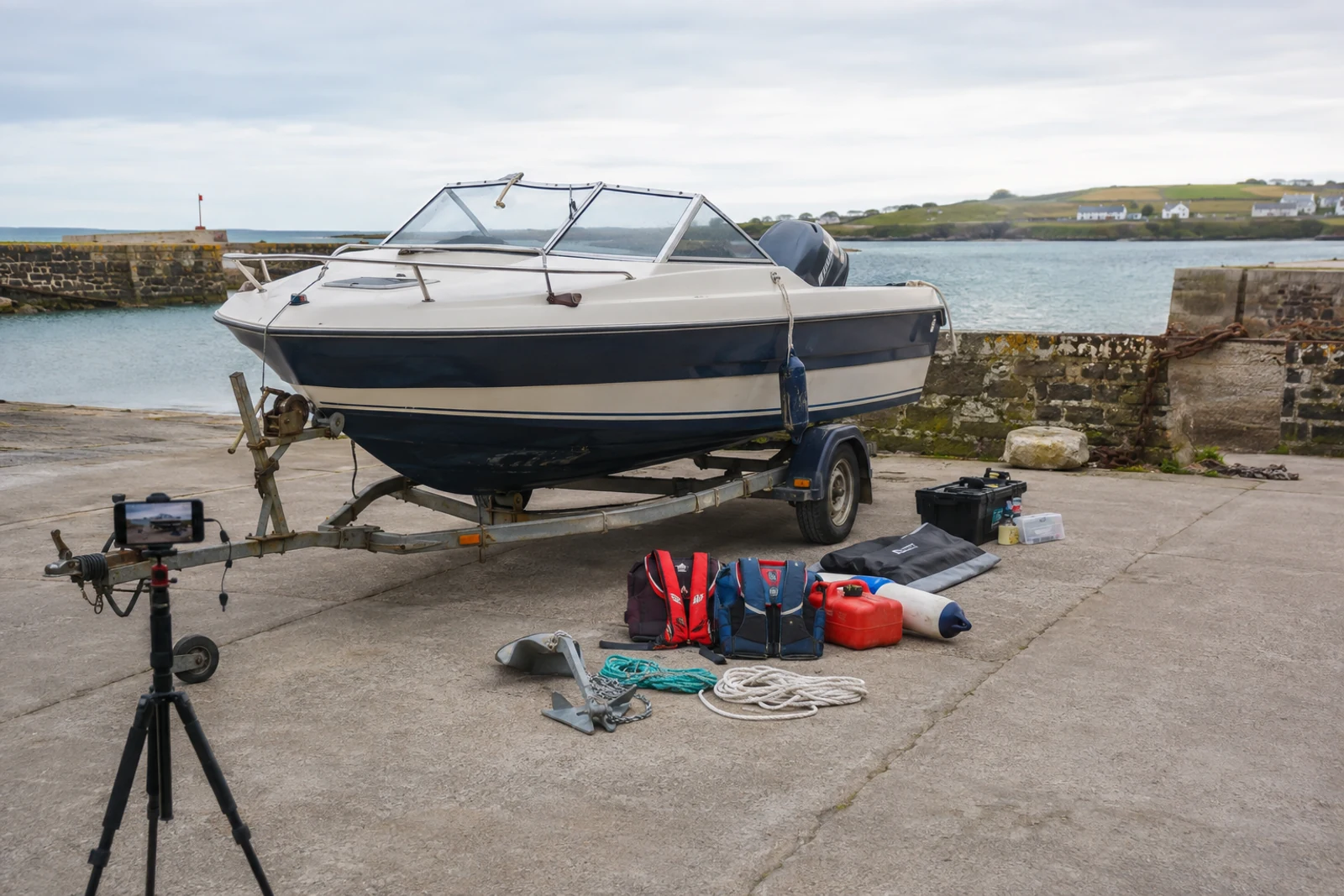
Use a complete side view as the lead image, then photograph bow, stern, deck, cockpit, interior, transom, propeller, controls and accessible hull areas. Include osmosis concerns, cracking, repairs, corrosion, leaks, damaged upholstery and weathered covers rather than relying on distant water photographs. State when the boat was last afloat, how the engine was run and whether pumps, steering, navigation lights and electronics were tested. A short running video can support the advert, but it is not a survey or guarantee of seaworthiness.
Condition evidence buyers need
- Use current, unfiltered photographs from consistent angles.
- Show repairs and impact damage at useful scale.
- Describe the exact test date and conditions.
- Do not claim seaworthiness or safety certification without proper evidence.
Inventory marine equipment without implying certification
List anchors, lines, fenders, covers, batteries, fuel tanks, instruments, radios, fish finders, navigation equipment and removable accessories individually. Record lifejackets and safety equipment as included items, but do not promise that age, sizing or service status makes them suitable for the next owner. Flares, fuel and pressurised equipment need lawful, appropriate handling and may not belong in an ordinary transfer. Photograph valuable removable equipment and confirm at handover that the inventory matches the agreed price.
Build a transparent inventory
- Separate fixed equipment from removable accessories.
- Record battery age and observed charging behaviour where known.
- Keep expired or restricted safety items out of an ordinary bundle.
- State which equipment was powered on and which remains untested.
Treat the trailer and collection as a second inspection
If a road trailer is included, record manufacturer details, gross weight where documented, dimensions, coupling, winch, rollers, tyres, bearings, brakes and lighting. A trailer that supports a boat in storage is not automatically ready for a long road journey. Agree whether the buyer will launch, survey, tow or use a professional transporter. Choose a safe inspection location, retain control of keys and equipment, and verify cleared payment independently before releasing the craft or documents.
Before the boat leaves
- Check towing compatibility and legal requirements independently.
- Disclose tyre age, bearing noise, corrosion and lighting faults.
- Agree lifting, launching or recovery responsibility in advance.
- Use a written receipt listing boat, engine, trailer and accessories.
Price the complete package, not the dream
Compare boats of the same design, size, engine type, age and documented condition. Asking prices for freshly serviced packages with sound trailers are not direct comparisons for a project boat with an untested engine. Separate the value of recent professional work and included equipment, but do not expect every euro spent on maintenance to increase the sale price equally. Season affects attention, yet a complete evidence file can matter more than waiting for perfect weather. Decide your negotiation range privately and update the advert if the boat's storage, test or included equipment changes.
Make comparisons meaningful
- Match hull and engine condition before comparing price.
- Account for trailer readiness and transport cost.
- Support recent servicing with dated records.
- Avoid unsupported phrases such as immaculate or ready for sea.
The practical takeaway
A credible boat advert works like a remote first inspection. Exact identity, current hull and engine evidence, a complete equipment inventory and honest trailer information help buyers decide whether a viewing or survey is worthwhile. Keep safety claims proportionate, protect sensitive identifiers and plan transport before accepting an offer. That combination creates a more searchable listing and a calmer local transaction for both parties.
Tags
More from Seller guides
10 min read
What Can I Sell Online in Ireland? A Room-by-Room Guide
A practical way to find saleable items around your home, decide what is worth listing and turn a clear-out into useful local ads.
11 min read
How to Sell Multiple Items Online Without Losing Track
A simple listing workflow for an Irish home clear-out, move or stock reduction, including batches, photos, pricing and buyer handovers.
9 min read
How to Prepare a Used Item for Sale Online: 30-Minute Checklist
Clean, test, measure and photograph a used item efficiently so buyers can understand its condition before they contact you.