
By Local Ads Editorial Team · Irish Marketplace Guides
Buying and Selling Used Power Tools in Ireland: A Practical Guide
Evaluate batteries, guards, accessories, wear and ownership before a local power-tool deal, and write a listing that serious buyers can assess.
Published 9 August 2026 · Reviewed 20 August 2026 · 11 min read
Used tools can make a budget go further, but missing guards, tired batteries and hard commercial use are not always obvious in a cover photograph. Buyers should identify the exact model and intended workload; sellers should state what has been tested, what is included and what safety parts are absent. Never test a tool with a damaged cable, cracked battery, jammed guard or unknown modification. This guide covers ordinary consumer and trade tools, not specialist industrial equipment that requires formal inspection or certified competence.
Identify the model, platform and duty level
Model suffixes can change voltage, generation, chuck, brake, electronics or supplied accessories. Confirm whether a cordless bare tool matches batteries you already own and whether those batteries are genuine and suitable. Compare the tool's rated duty with your intended work; a light DIY saw priced cheaply may still be wrong for sustained site use. Search current part availability for brushes, guards, switches, chargers and proprietary fittings before valuing an older model.
Record these identifiers
- Full model and type number from the rating plate.
- Voltage, battery family and charger compatibility.
- Blade, disc, bit, collet or accessory standard.
- Manufacturing age or service history where available.
- Original safety equipment and manual availability.
Inspect safety parts before power
Disconnect the battery or plug before a physical inspection. Look for cracked housings, taped cables, bent bases, missing guards, loose handles, damaged switches and evidence of overheating. Rotate accessible mechanisms only as the manufacturer permits. A clean exterior can conceal dust ingestion or bearing wear, while heavy cosmetic use does not always mean unsafe operation. Any uncertain repair should be assessed by a competent tool technician rather than tested in a seller's hand.
Stop signs
- Removed, tied-back or slow-returning guards.
- Exposed conductors, damaged plugs or improvised cable joints.
- Swollen, cracked or unusually hot battery packs.
- Burn marks, melted vents or strong electrical smell.
- Missing rating plate or serial area that appears deliberately altered.
Test under controlled load
A brief no-load spin may not reveal clutch slip, bearing noise, brake failure or a battery that collapses under demand. Use correct personal protective equipment and a safe test material only if the environment, seller and your competence permit it. Observe smooth start, speed control, vibration, braking and heat. Do not fit an unknown damaged blade or disc simply to demonstrate the tool. For high-value kits, a professional bench test can be worthwhile.
Test observations
- Trigger, lock-off and variable speed behave consistently.
- No excessive sparking, vibration, grinding or gearbox knock.
- Brake and guard return operate as designed.
- Battery sustains moderate load and charger completes normally.
- Dust extraction, lights and electronic controls work where fitted.
Value the kit component by component
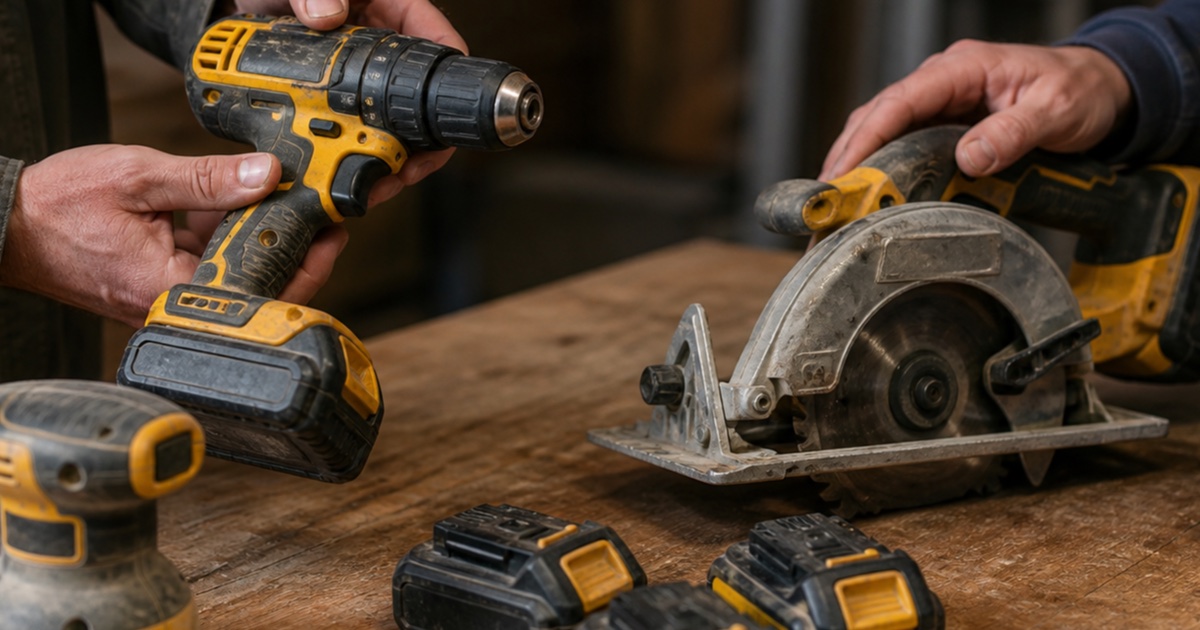
Separate the value of the bare tool, batteries, charger, case and useful accessories. Battery age and health can dominate a cordless kit price. Worn blades and abrasives add little, while a genuine recent high-capacity battery may add substantial value. Check whether accessories are safe and compatible rather than treating quantity as quality. Sellers should photograph the full kit in one frame and list every model separately so the buyer knows exactly what is included.
Pricing adjustments
- Current bare-tool price and whether the model is still supported.
- Battery capacity, age, diagnostic health and replacement cost.
- Original charger, case, side handle, fence and extraction parts.
- Consumable condition and any immediate service requirement.
- Evidence of professional daily use versus occasional household use.
Check ownership and arrange a sensible handover
Tools are portable and can be difficult to trace. Ask for purchase history, serial numbers and a credible explanation of ownership, especially for large matching kits at an implausible price. Do not buy equipment with identifiers removed. Meet somewhere suitable for safe inspection and never operate cutting equipment in a public car park. Local Ads listings can carry detailed model and condition information, but buyers and sellers must still verify ownership, safe condition and offline payment themselves.
Transaction record
- Keep messages that identify the agreed kit and price.
- Record serial numbers on a receipt for valuable equipment.
- Confirm payment directly rather than trusting a screenshot.
- Transfer manuals, keys and safety accessories with the tool.
- Mark the listing unavailable immediately after collection.
The practical takeaway
A good used tool purchase begins with compatibility and ends with controlled testing. Identify every component, inspect guards and power systems before switching on, and value batteries separately. Sellers who show serialised models, included safety parts and honest wear make it easier for serious buyers to decide. If a tool's ownership or safe operation cannot be established, do not let a low price overrule the warning.
Tags
More from Buyer safety
7 min read
Buying and Selling Second-Hand Baby Items in Ireland: A Safety Guide
A careful guide to listing and buying used prams, cots, highchairs, toys and baby equipment in Ireland, with safety-first checks.
 Buyer safety
10 min read
Free Stuff in Ireland: How to Give Away and Collect Items Safely
A practical guide to giving away usable items and arranging free local collections without creating unnecessary safety or privacy risks.
 Buyer safety
10 min read
How to choose a local tradesperson in Ireland
Compare qualifications, references, written quotes, insurance and payment stages before hiring someone for work in your home.