
By Local Ads Editorial Team · Irish Marketplace Guides
Buying Used Appliances in Ireland: Washing Machines, Fridges and Dryers
Inspect, measure, test and transport a second-hand appliance with fewer surprises using this practical Irish buyer checklist.
Published 10 August 2026 · Reviewed 20 August 2026 · 12 min read
A used appliance can deliver excellent value when it fits the space, performs correctly and can be moved without damage. It can also become an immediate disposal cost when measurements, plumbing, electrical supply or faults are ignored. Ask for the exact model number before travelling and review the manufacturer's installation requirements and current safety information. Consumer rights differ between a business purchase and a private sale; the CCPC advises buyers to examine second-hand goods carefully and ask about their history and condition.
Measure the full route, not only the gap
Measure appliance width, depth and height, then check doors, hallways, turns, stairs, lifts and vehicle opening. Allow clearance for hoses, ventilation and door swing. Integrated appliances need additional checks for cabinet dimensions and fittings. Confirm the electricity, water, waste and ventilation arrangement required by the exact model. Never assume that an appliance of the same advertised width will fit the existing connection or clear the countertop.
Measurement plan
- Appliance body plus handles, doors, hoses and rear clearance.
- Narrowest doorway and tightest turn between collection and installation.
- Required ventilation space around fridges and dryers.
- Water inlet, drain position and electrical outlet accessibility.
- Safe vehicle dimensions and upright transport requirements.
Research the model and likely repair path
Use the model and product number, not appearance alone. Check approximate age, capacity, energy information, known service notices and whether common parts remain available. A discontinued appliance is not automatically poor value, but an unavailable control board or sealed-system repair may change the decision. Ask who used it, why it is being sold, how long it has been disconnected and what maintenance or repair has occurred.
Questions before viewing
- Exact model, serial-derived age where appropriate and ownership length.
- Reason for sale and date last used normally.
- Repairs, recurring errors, leaks or unusual noise.
- Included shelves, transit bolts, hoses, stacking kit or manual.
- Whether the seller can demonstrate a complete operating cycle.
Test beyond switching it on
A lit display proves very little. A washing machine should fill, turn, heat where practical, drain and spin without leaks or severe bearing noise. A fridge should cool from a known starting point, seal properly and avoid excessive compressor cycling. A dryer should rotate, heat appropriately and show clean filters and an unobstructed condenser or vent path. Do not bypass safety devices, and stop immediately if there is exposed wiring, burning smell, damaged plug or water near electrical parts.
Functional checks
- Controls, display, door lock and seals operate correctly.
- No visible leaks, corrosion trail or improvised wiring repair.
- Drum, fan or compressor sounds are consistent rather than grinding or knocking.
- Filters, trays, shelves and dispensers are complete and cleanable.
- Model plate and electrical rating remain legible and intact.
Inspect hygiene and hidden condition
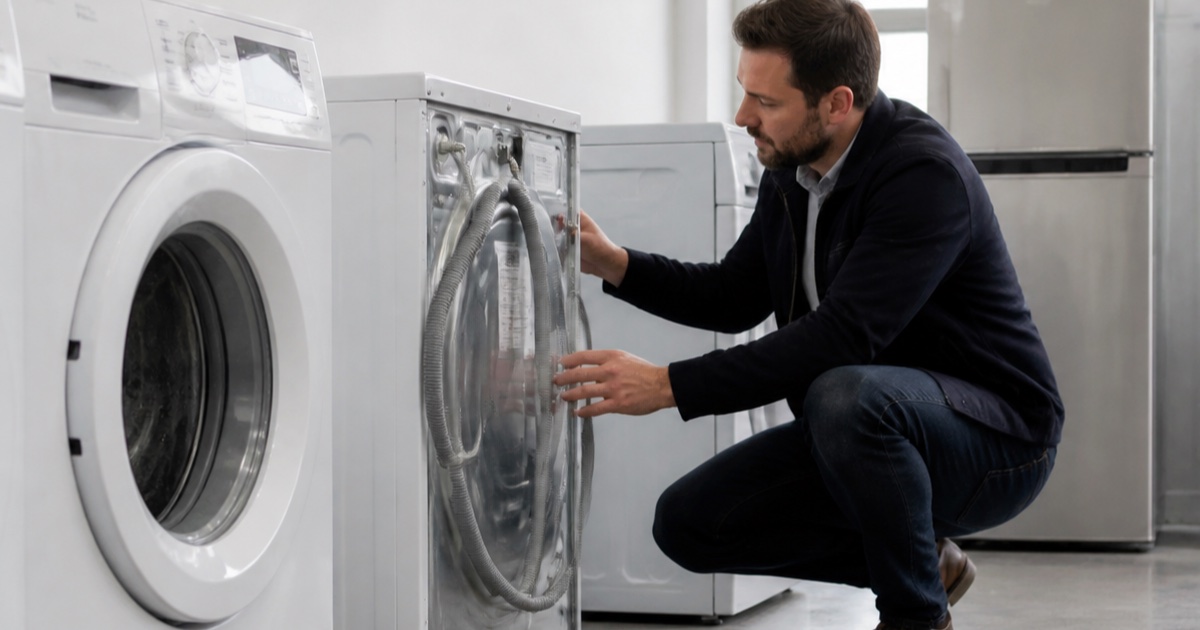
Look under seals, drawers and removable shelves for mould, residue, pest evidence and corrosion. Strong fragrance can mask odour rather than prove cleanliness. Inspect beneath and behind the appliance where the seller permits, because leak staining and damaged feet may be hidden from the front. Hygiene problems can sometimes be cleaned; structural rust, contaminated insulation or recurring leaks may not be economical. Sellers should photograph and disclose these areas rather than cleaning only the visible door.
Condition warning signs
- Rust around the base, drum, hinges or refrigeration pipework.
- Perished seals, cracked shelves or missing lint filters.
- Persistent odour after doors have been open.
- Water staining, swollen cabinetry or mineral tracks from leaks.
- Evidence the appliance was stored outside or transported incorrectly.
Move and install it correctly
Use enough people, an appliance trolley, straps and suitable vehicle. Secure doors and removable parts. Refrigeration appliances usually need upright handling and an appropriate settling period according to manufacturer instructions before power is restored. Washing machines should use transit bolts where specified. Installation involving fixed wiring, gas, ventilation or uncertainty should be completed by a competent qualified person. Local Ads can connect nearby buyers and sellers, but transport and installation remain their responsibility.
Handover checklist
- Photograph condition before moving and agree who bears transport risk.
- Use the correct transit hardware and keep hoses controlled.
- Never lift by a door, control panel or exposed pipe.
- Follow the manufacturer's levelling and settling instructions.
- Retest safely after installation before relying on the appliance.
The practical takeaway
The right used appliance must pass four tests: it fits, it functions, it can be transported safely and its likely remaining value exceeds the risk and immediate costs. Get the model before travelling, request a meaningful demonstration and inspect hidden areas. If safe operation or installation is uncertain, use a qualified professional rather than improvising around water, heat, electricity or gas.
Tags
More from Buyer safety
7 min read
Buying and Selling Second-Hand Baby Items in Ireland: A Safety Guide
A careful guide to listing and buying used prams, cots, highchairs, toys and baby equipment in Ireland, with safety-first checks.
 Buyer safety
10 min read
Free Stuff in Ireland: How to Give Away and Collect Items Safely
A practical guide to giving away usable items and arranging free local collections without creating unnecessary safety or privacy risks.
 Buyer safety
10 min read
How to choose a local tradesperson in Ireland
Compare qualifications, references, written quotes, insurance and payment stages before hiring someone for work in your home.