
By Local Ads Editorial Team · Irish Marketplace Guides
Buying Used Farm Machinery in Ireland: A Practical Inspection Guide
Plan a safer used machinery purchase with checks for identity, hours, structure, hydraulics, PTO equipment, documentation and total ownership cost.
Published 8 August 2026 · Reviewed 20 August 2026 · 13 min read
Used machinery value depends on suitability, history and condition under load. Fresh paint and low displayed hours cannot replace identification, service evidence and an inspection by someone competent in that machine type. Before viewing, define the tractor power, hydraulic flow, linkage, PTO, transport width, output and guarding needed for your farm. This guide is a buyer framework, not engineering or safety certification. Agricultural machinery can cause fatal injury; testing must follow the manufacturer's procedures in a controlled area with trained people.
Specify the job and compatibility
Start with soil, acreage, crop, livestock system, terrain and annual workload. Confirm tractor horsepower is not the only compatibility measure: hydraulic flow, spool valves, PTO speed, linkage category, electrical connections, braking and permitted weight all matter. Check shed, gateway, road and transport dimensions. Buying excess capacity increases fuel, soil pressure and maintenance, while undersized machinery can be unsafe or uneconomic under continuous strain.
Pre-view specification
- Required output, working width and realistic annual hours.
- Tractor power, lift capacity, hydraulic flow and connections.
- PTO speed, shaft and guarding compatibility.
- Road width, lighting, braking and transport requirements.
- Dealer, parts and competent service support within practical reach.
Verify identity and service history
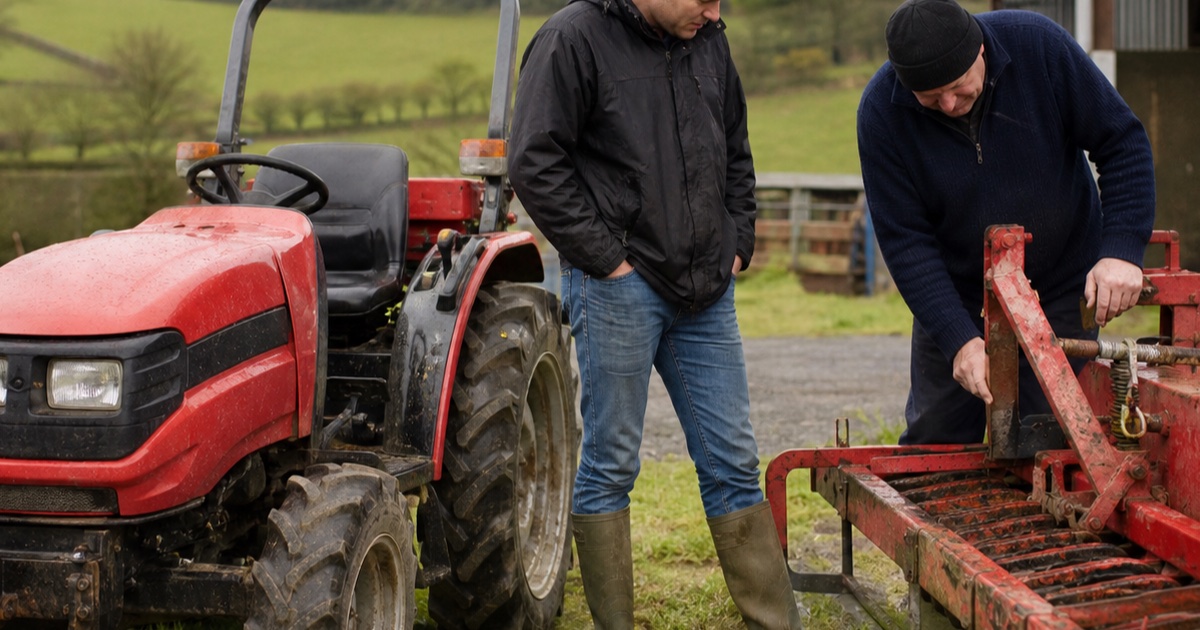
Record serial, chassis, engine and registration details appropriate to the machine. Match them to invoices, registration documents and the seller's authority to sell. Ask about finance, imports, previous owners, insured losses and major component replacement. Hour meters can fail or be replaced, so compare display hours with pedal, seat, hitch, pin and control wear. A coherent maintenance record is more useful than one recent service immediately before sale.
History evidence
- Serial and registration identifiers are intact and consistent.
- Seller can explain ownership and provide appropriate documentation.
- Service intervals, filters and fluids match the claimed workload.
- Major engine, transmission, hydraulic or structural work is documented.
- Finance and theft checks are completed through suitable current sources.
Inspect structure, wear and safety systems
View clean enough to inspect but be cautious of recent pressure washing that hides leaks. Examine chassis, drawbar, hitch, loader mounts, axles, pivots and folding sections for cracks, distortion or poor weld repairs. Check tyres for age and matching suitability, not tread alone. Guards, emergency stops, interlocks, steps, rails, mirrors and lighting should be present and functional. Do not enter unsupported raised equipment or approach moving PTO and hydraulic parts.
Physical inspection
- Structural members and high-load points free from suspicious repair.
- Pins, bushes, bearings and linkages within acceptable wear.
- Hydraulic hoses free from abrasion, cracking and active leaks.
- Cab, rollover protection and restraint systems intact where fitted.
- All required guards, warning labels and transport locks present.
Operate from cold and under safe load
Arrange for the machine to be cold when you arrive. Observe starting, smoke, pressure build-up, warning lights and unusual noise. Test steering, brakes, transmission ranges, linkage, hydraulics, PTO and electronic controls according to safe procedures. A machine may behave acceptably without load yet fail when warm or working. For valuable equipment, commission an independent agricultural engineer or experienced technician who can test pressures, scan systems and interpret wear.
Operational evidence
- Cold start and warm restart without concealed pre-heating tricks.
- Stable oil pressure, charging, temperature and warning systems.
- Hydraulics hold and respond without severe drift or chatter.
- Transmission, clutch, brakes and steering work through normal ranges.
- Machine completes a representative safe work test where possible.
Calculate ownership and compliance costs
Add transport, tyres, fluids, wearing parts, missing guards, immediate service, registration, insurance and professional repairs. Confirm whether dimensions or weight require specialist haulage. Check current rules for road use, lighting, braking, operator competence and equipment-specific inspections with the relevant authorities and advisers. Local Ads Farming can help compare equipment and connect parties; it does not certify machinery, transfer title or guarantee legal compliance.
Budget beyond the price
- Independent inspection and history checks.
- Safe loading, haulage and unloading.
- Immediate service and replacement of safety-critical parts.
- Expected seasonal downtime and parts lead time.
- Insurance, registration and current road or workplace obligations.
The practical takeaway
A suitable machine with documented wear is often a better buy than a polished unknown. Define the job, verify identity, inspect safety systems and test under realistic controlled conditions. Use independent expertise for high-value or complex equipment and price the first season's work, not only the handover. If the seller cannot support ownership or refuses a reasonable inspection, stop the purchase.
Tags
More from Buyer safety
7 min read
Buying and Selling Second-Hand Baby Items in Ireland: A Safety Guide
A careful guide to listing and buying used prams, cots, highchairs, toys and baby equipment in Ireland, with safety-first checks.
 Buyer safety
10 min read
Free Stuff in Ireland: How to Give Away and Collect Items Safely
A practical guide to giving away usable items and arranging free local collections without creating unnecessary safety or privacy risks.
 Buyer safety
10 min read
How to choose a local tradesperson in Ireland
Compare qualifications, references, written quotes, insurance and payment stages before hiring someone for work in your home.