
By LocalAds.ie Editorial Team
How to Sell Clothes Online in Ireland: Photos, Pricing and Postage
Prepare, photograph, measure and price second-hand clothes clearly, then choose collection or postage that protects the garment and the Irish seller.
Published 7 September 2026 - 13 min read
Selling clothes online is easy to start and surprisingly easy to do badly. A buyer cannot feel the fabric, test the zip or compare the fit with a familiar garment, so photographs, measurements and condition notes must replace that missing inspection. Irish sellers also need to calculate postage before listing; otherwise a profitable sale can disappear into an oversized parcel charge.
Choose what deserves an individual advert
List distinctive coats, dresses, footwear, premium knitwear, occasionwear and strong branded pieces separately when buyers will search for their exact attributes. Combine ordinary basics only when a bundle shares size, season, style and condition. Donate or recycle textiles that are too worn, stained or damaged to justify a buyer’s time and delivery cost.
Create three groups: individual listings, coherent bundles and non-saleable items. This avoids spending twenty minutes photographing a top worth less than its packaging, and it prevents damaged filler from weakening a good bundle. Record each item with a temporary code so photographs, measurements and messages remain matched.
Prepare the garment honestly
Follow the care label, remove lint and allow the garment to dry fully. Steam or iron only when the fabric permits it. Empty pockets and remove personal receipts, names, alteration notes and dry-cleaning tags. Use a neutral lint-free hanger or clean flat surface rather than styling that hides the shape.
Do not cover smoke, damp, pet or storage odours with heavy perfume. Disclose anything persistent that a buyer may need to manage. Avoid aggressive fabric shaving, bleach or colour treatment that creates a misleading temporary finish. Photograph the actual post-cleaning condition that will be delivered.
Inspect every common wear point
Use daylight and examine front, back, inside and lining. Check collar, cuffs, elbows, underarms, waistband, seat, knees, hems and pocket edges. Look for fading, pilling, thinning, pulls, holes, stains, transferred dye, loose seams, missing beads and stretched elastic. On footwear, inspect soles, heels, insoles, lining, fasteners and both shoes together.
Test every zip, button, popper, hook, drawstring, belt and adjustable part. Compare removable hoods, liners and straps with the garment description. Record repairs and alterations, including shortened hems, taken-in seams and replaced hardware. A tidy repair can be a positive, but only when the buyer knows it exists.
Use a condition scale consistently
A practical grading approach
- New with tags: unused, original tags attached and no storage damage.
- New without tags: genuinely unused but with no retail tags.
- Excellent used condition: minimal observable wear, described specifically.
- Good used condition: ordinary visible wear with every fault photographed.
- Fair condition: usable but obvious wear or repair, priced and titled clearly.
- Parts, textile reuse or recycling: not represented as wearable when it is not.
The words matter less than consistency and evidence. ‘Worn once’ does not guarantee excellent condition, and ‘vintage’ does not excuse moth damage. Describe what can be seen rather than relying on adjectives: light cuff fade, 4 mm repaired seam opening, or two faint marks near the left pocket.
Record label details and fabric accurately
Photograph brand, labelled size, fibre composition, care instructions and country or product identifiers where useful, while hiding personal information. Copy labels accurately and do not guess that a fabric is silk, wool, leather or cashmere. If the label is missing, say so and describe only observable texture and construction.
Measurements reduce fit disputes
Sizing varies by brand, region, year and garment shape. Lay the item flat without stretching and explain how each approximate measurement was taken. For tops and jackets, common measurements are underarm-to-underarm, shoulder width, sleeve and back length. For trousers, record waist laid flat, rise, inside leg and hem width. Dresses may also need waist, hip and total length.
State the labelled size separately from measurements and note stretch. Do not double a flat waist unless you clearly say you have done so. A photograph with the tape correctly aligned can support the figures, but the written values should still be searchable and accessible.
Build a repeatable photo station
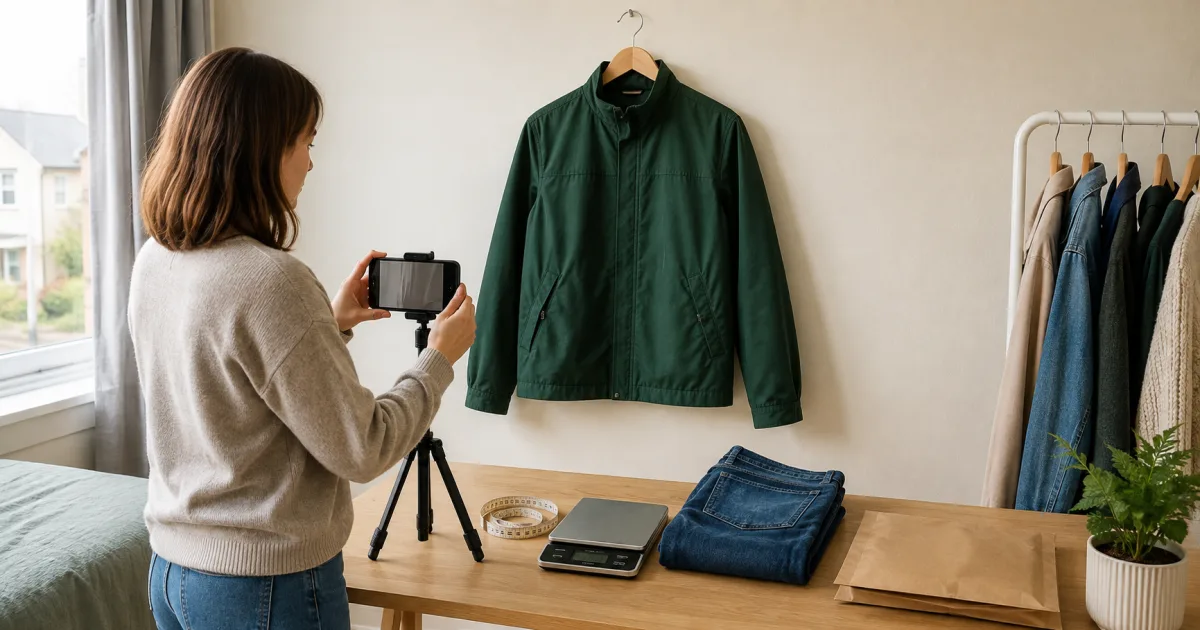
Use bright indirect daylight, a plain background and a clean phone lens. Disable beauty filters, portrait blur and automatic effects that change colour or texture. Keep the camera parallel to the garment to avoid distorted proportions. Fill most of the frame while leaving enough margin to show the complete silhouette.
Photographs every strong listing needs
- Full front and full back.
- Side profile or drape when shape is not obvious.
- Labelled size, fibre and care labels.
- Fasteners, pockets, lining and distinctive construction.
- Close texture and true colour in neutral light.
- Every stain, hole, repair, fade or missing part.
- Measured dimensions with the tape visible where helpful.
- Included accessories and packaging only if part of the sale.
Flat lays give consistent shape; hangers show drape; a mannequin can help with structured garments. You do not need to model clothes. If you do, protect identity and background privacy, and still include unmodelled condition images. Never reuse retailer photographs as the main evidence or digitally remove faults.
Make colour limitations explicit
Photograph near a window without mixed yellow lamps and avoid direct sun that creates harsh contrast. Use a neutral reference only when it does not distract. Phone screens differ, so describe the colour in plain language and note undertones or wash variation. Do not promise an exact match based solely on a screen image.
Write a searchable, factual title
Put the garment type, brand where genuine, labelled size, primary colour and useful feature in the title. ‘Green waterproof jacket, size M, removable hood’ tells a buyer more than ‘stunning coat must see’. Avoid unrelated labels, repeated keywords and claims such as waterproof, vintage or designer unless evidence supports them.
Answer buyer questions in the description
Include these details
- Exact item type, labelled size and approximate measurements.
- Brand, model or collection only when verified.
- Fibre composition and care information from the label.
- Consistent condition grade and every observable fault.
- Alterations, repairs, missing belt, hood, buttons or accessories.
- Cleaning, storage, smoke, pet or fragrance context where relevant.
- What is included and whether a bundle can be split.
- County for collection or exact postage service and charge.
Price from the current second-hand market
Search current Irish adverts for the same garment type, brand, material, size range and condition. Asking prices are not confirmed sale prices, so use several comparables. Retail price is historical context, not automatic value. Demand, season, condition, shipping cost and how common the item is usually matter more.
Set the item price, lowest acceptable amount and postage separately. Leave modest negotiating room only if you are genuinely willing to respond to offers. Deeply inflated prices create stale listings and repeated messages. For low-value pieces, a useful bundle or local collection can deliver more value than individual postage.
Price branded and vintage claims carefully
Photograph relevant labels, stitching, hardware and identifiers without exposing personal information. Do not declare authenticity when you cannot establish it, and never sell a counterfeit item. Age alone does not create vintage value: condition, design, provenance, material and buyer demand all matter. Seek specialist appraisal for genuinely high-value pieces.
Calculate postage with the packed item
Fold the garment as it will ship, place it in its inner protection and weigh the complete package on reliable scales. Measure length, width and depth at their largest points. An Post determines category and price from size, shape, weight and destination; exceeding one limit can move an item from large envelope to packet or parcel.
Use the current An Post calculator or your chosen carrier’s official price and terms on the day you list. Do not hard-code an old rate into a long-running advert. Record the service, tracking, signature or insurance included, delivery geography and what happens if the buyer combines several items.
Choose tracking and compensation consciously
Standard postage may offer no tracking or compensation. More valuable clothing may justify a registered, insured or courier service, subject to current eligibility, exclusions and proof requirements. Check whether second-hand garments and the declared value are covered. Keep proof of posting and tracking until the buyer confirms receipt.
Pack for rain and handling
Make sure the garment is completely dry. Use a clean inner water-resistant bag and a strong correctly sized outer mailer or box. Protect structured shoulders, hats, shoes and delicate decoration from crushing. Seal every opening and attach a clear label without covering carrier barcodes or adding unnecessary personal information.
Do not include fragrance, detergent pods, unsealed liquids, wire hangers or gifts that were not agreed. Photograph the folded item, its condition and the sealed parcel before dispatch. This evidence does not prove delivery, but it documents what was packed.
Offer local collection when it adds value
Collection works well for bundles, bulky coats, footwear lots and low-price pieces where postage dominates the total. Give an approximate public area until the meeting is agreed and do not publish a residential address. Meet appropriately, keep marketplace messages and allow the buyer to compare the item with the advert before payment.
Protect payment and account details
Verify money inside your own trusted banking or payment application. A screenshot, buyer-forwarded email or courier page is not proof. Never pay a courier insurance, account upgrade or release fee to receive a sale, and never share a card PIN, online banking password or one-time code. Do not move to an unknown link because a buyer claims the marketplace payment failed.
Know whether you are acting as a business
A household wardrobe clear-out is normally a private sale, but regular sourcing and resale for profit may amount to trading. The CCPC explains that consumer protections apply to purchases from a business and that a trader cannot pretend to be a consumer to avoid obligations. Represent status accurately and obtain appropriate tax or legal advice when selling becomes commercial.
Manage messages and offers efficiently
Keep a saved factual reply with measurements, faults, collection area and postage service, but answer any question the advert missed. Confirm an agreed price, included items, delivery address process and dispatch deadline in writing. Do not mark sold or package the item until payment is genuinely verified.
Dispatch and update the advert promptly
Check the buyer-provided delivery details through the agreed channel, purchase the correct service and send tracking without publishing it. Mark the listing sold so other buyers are not misled. If a bundle changes, replace its photographs and inventory rather than appending a vague note that some pieces are gone.
Common reasons clothing does not sell
- Dark, filtered or incomplete photographs.
- No measurements despite inconsistent brand sizing.
- Generic title with no garment type, size or colour.
- Condition grade contradicted by visible wear.
- Price anchored to retail rather than current demand.
- Postage guessed or nearly equal to the item price.
- Seasonal item listed too late without a realistic discount.
- Slow replies or an inventory that is no longer accurate.
Final online clothing seller checklist
- Item is worth selling alone or belongs in a coherent bundle.
- Cleaning follows the care label and the garment is fully dry.
- Every wear point, fastener, repair and alteration is checked.
- Label details and flat measurements are transcribed accurately.
- Front, back, texture, labels and every flaw are photographed clearly.
- Title and description use factual searchable attributes.
- EUR price reflects current comparable condition and demand.
- Packed weight, dimensions, service and current postage cost are verified.
- Payment is confirmed independently before collection or dispatch.
- Proof, tracking and listing status are retained and updated.
The best online clothing listings reduce uncertainty. Honest preparation, neutral photographs, useful measurements and exact condition notes let a buyer judge fit and value without handling the item. When the seller also measures the packed parcel and verifies payment independently, a wardrobe clear-out becomes a repeatable process rather than a series of avoidable disputes.
Tags
More from Seller guides
10 min read
What Can I Sell Online in Ireland? A Room-by-Room Guide
A practical way to find saleable items around your home, decide what is worth listing and turn a clear-out into useful local ads.
11 min read
How to Sell Multiple Items Online Without Losing Track
A simple listing workflow for an Irish home clear-out, move or stock reduction, including batches, photos, pricing and buyer handovers.
9 min read
How to Prepare a Used Item for Sale Online: 30-Minute Checklist
Clean, test, measure and photograph a used item efficiently so buyers can understand its condition before they contact you.