
By Local Ads Editorial Team · Irish Marketplace Guides
How to Sell a Used Electric Bike in Ireland
Prepare an e-bike for resale with ownership, battery, charger, motor, frame, sizing and test-ride evidence for Irish buyers.
Published 22 August 2026 · Reviewed 25 August 2026 · 15 min read
An electric bike combines a bicycle with a battery, motor, controller, charger and software ecosystem, so a seller must document more than frame size and tyre condition. Battery age, replacement cost, legal road configuration, ownership and key or charger completeness can change value dramatically. Because e-bikes are attractive theft targets, buyers also look for credible provenance while sellers should keep exact home storage details private. A comprehensive LocalAds.ie listing can connect the bike with nearby riders who want to inspect and test it, provided the public information is specific without exposing serial numbers or security routines.
Establish ownership and exact system identity
Record frame maker, model, size, approximate year, wheel size, motor position and maker, battery voltage and rated capacity, display, charger and key count. Retain the full frame and battery serials privately along with receipt or service evidence. Do not publish complete identifiers, lock codes or the location where the bike is normally stored. If the bike was modified, state every change to motor, controller, speed behaviour or battery. Do not describe a non-compliant configuration as an ordinary road e-bike; legal classification and insurance implications can differ, and buyers need accurate information.
Inspect the bicycle before the electrical system
Check frame and fork for cracks or impact, headset, wheels, spokes, tyres, brakes, drivetrain, pedals, saddle, racks and fasteners. E-bike weight increases braking and wheel loads, so ordinary maintenance defects matter. Measure frame size and useful rider-fit dimensions rather than promising a universal height range. Record brake-pad, chain and tyre wear and recent service. A clean frame should not hide corrosion or repaired damage. If structural integrity is uncertain, obtain a competent assessment before listing or sell only through an appropriate parts route with unmistakable disclosure.
Test battery, motor, charger and controls
Use the approved charger and observe charging, battery mounting, key release, display, assistance levels, walk mode and motor response during a normal ride. Note error codes, cut-outs, unusual noise and realistic current range based on your recent use, terrain and assistance level. Do not guarantee future range or battery capacity without a recognised diagnostic. State battery age, storage routine, replacement or repair history and whether keys are original. Swollen, damaged, wet or overheating batteries require specialist handling and should not be casually charged, transported or passed to a buyer.
Photograph the whole bike and expensive components
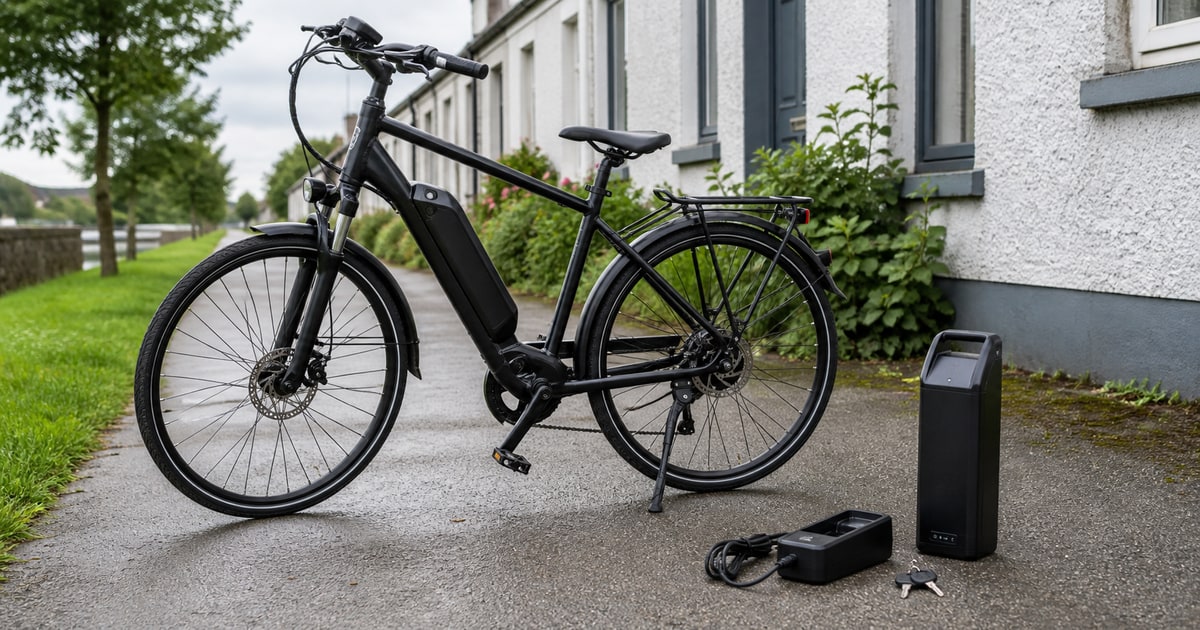
Show both complete sides, front and rear, frame joints, fork, wheels, drivetrain, brakes, motor, battery mount, display, charger, keys and accessories. Obscure full serial numbers and remove navigation history or connected-account information. Photograph scratches, cable wear, damaged plastics and any repair. Use daylight and keep the bike upright safely; do not photograph it in a way that reveals a private storage entrance or lock arrangement. A powered display image can demonstrate operation, but the written description should explain mileage or usage readings as displayed rather than guaranteed.
Price the battery and bicycle as one system
Compare the same model and battery specification, then similar current Irish e-bikes. Consider replacement battery availability and cost, system support, mechanical wear, charger and keys, warranty transfer and documented diagnostics. An expensive original receipt does not preserve value when the battery is old or proprietary parts are unavailable. Conversely, a recent genuine replacement battery with documentation may matter. Do not add the full cost of accessories to the asking price. Decide which lights, lock, rack, bags or spare parts are included and remove anything not shown in the inventory.
Control the test ride and ownership transfer
Choose a safe public meeting location, verify the prospective rider's identity to your satisfaction and retain something appropriate under an agreed process before allowing a test ride; never hand over bike and keys to an anonymous person who can simply leave. Explain controls and known issues. Confirm payment yourself before releasing charger, spare keys and ownership evidence. Provide a receipt with model and private serial if appropriate. Remove the bike from companion apps and transfer permitted accounts only through the maker's process. Close the Local Ads listing immediately after the bike leaves.
Turn the preparation into a Local Ads listing
LocalAds.ie gives sellers a direct route to people browsing Irish categories and counties. Choose the most specific category, use original photographs, describe the actual condition and select the contact methods you are comfortable managing. An ordinary listing can appear through relevant browsing and search. Optional paid promotion is clearly labelled and can provide additional visibility, but it does not change organic relevance, replace a fair price or guarantee a sale.
Final seller checklist
A credible e-bike listing proves lawful ownership privately, identifies the frame and electrical system, reports mechanical condition and gives honest battery evidence without promising future range. Original photographs should cover the motor, battery, charger, display, drivetrain, brakes and defects while keeping serials and storage details private. Check the maker's guidance for battery storage and transport, never ship or charge a battery showing swelling, impact, water ingress or abnormal heat, and disclose any replacement or repair documentation. Price against comparable Irish systems and replacement-battery realities. LocalAds.ie can help nearby riders discover the bike; a controlled test ride, independent payment confirmation and documented transfer of keys, charger, manuals and permitted app ownership complete the sale safely.
Tags
More from Seller guides
5 min read
How to Sell Used Luggage and Suitcases in Ireland
Turn an unused suitcase into a clear local listing with measured dimensions, honest wheel and zip checks, useful photographs and sensible collection details.
5 min read
How to Sell a Used Computer Monitor in Ireland
Describe the exact screen, show the ports and stand, explain what you tested and prepare a monitor listing buyers can assess before collection.
5 min read
How to Sell a Dining Table and Chairs in Ireland
Measure your dining set, document each chair, explain extension parts and organise collection so local buyers know exactly what they are getting.