
By Local Ads Editorial Team · Irish Marketplace Guides
How to Sell Second-Hand Furniture in Ireland
Prepare, price, photograph and advertise second-hand furniture for Irish buyers, with practical advice on measurements, condition, enquiries and collection.
Published 25 August 2026 · Reviewed 7 September 2026 · 15 min read
Furniture is one of the best categories for local classified selling because distance, dimensions and collection matter almost as much as style. A buyer looking for a dining table in Cork, a wardrobe in Galway or a sofa in Dublin usually wants to know whether the piece fits the room, the doorway and the vehicle before arranging a visit. That creates an opportunity for a careful seller: a measured, photographed and honestly described item can compete more effectively than a vague ad, even when the asking price is similar. This guide explains how to prepare furniture by room, establish a sensible local value and publish a LocalAds.ie listing that answers practical questions before collection day.
Decide whether each piece is worth selling separately
Start with replacement value, present condition, demand and the effort required to move the item. Solid wood tables, recognisable designs, quality office chairs and complete bedroom sets may justify individual listings. Low-value flat-pack pieces can work better as a bundle when the buyer can collect everything in one journey. Inspect joints, runners, hinges, upholstery, feet and backs rather than judging only the visible front. Record smoke, pet, damp or storage exposure where relevant. If structural damage makes an item unsafe, do not disguise it as cosmetic wear; explain the repair requirement or choose responsible disposal instead.
Clean carefully without hiding the history
Vacuum fabric, wipe hard surfaces with a suitable product and empty every drawer. Avoid heavy polish, wet cleaning or improvised repairs that could damage the material. Tighten only fittings you understand, keep original hardware together and disclose replacement screws, reupholstery or paint. Buyers are usually comfortable with ordinary signs of use when photographs show them clearly. What causes mistrust is a description such as excellent condition followed by a loose frame or stained cushion at collection. If removable covers have been washed, state that; if a mark could not be removed, photograph it in natural light.
Measure the item and the route out of the property
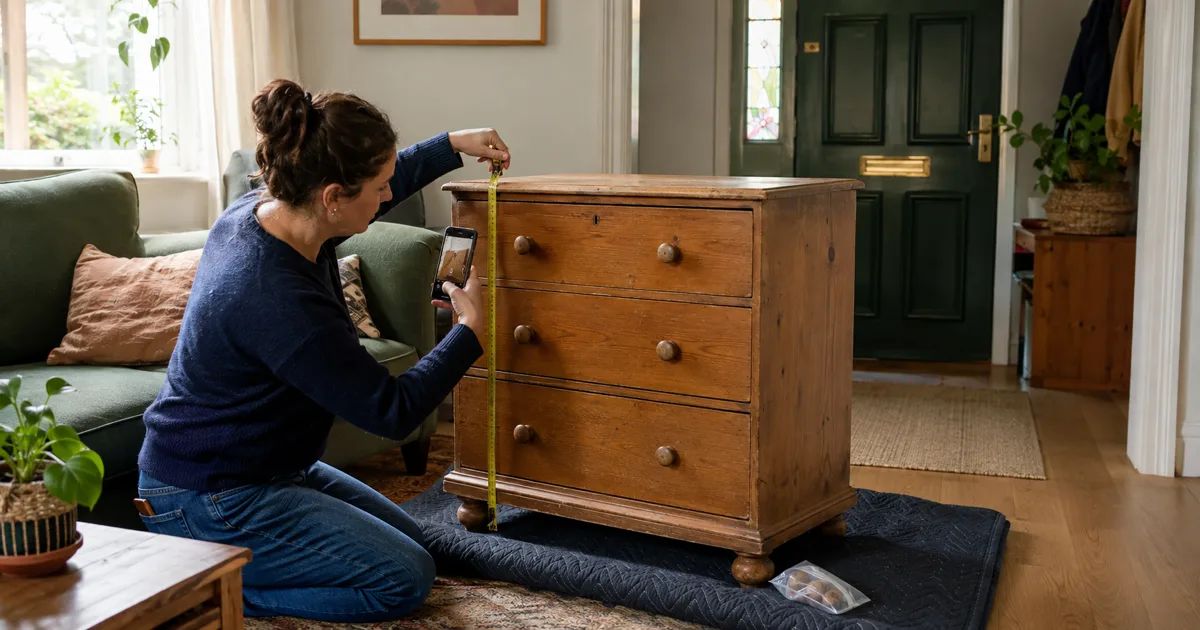
List width, depth and height in centimetres, then add useful measurements such as seat height, table clearance, wardrobe rail width or bed-frame mattress size. Measure removable sections separately and say whether legs, shelves or doors detach. Walk the exit route and note stairs, lifts, narrow hallways, parking restrictions and the number of people needed to lift safely. Exact home addresses should remain private until a genuine collection is agreed. A general locality on Local Ads is enough for discovery; practical access details can be shared with the selected buyer without exposing your household to every visitor.
Create a photograph set that proves scale and condition
Use daylight and clear the surrounding room so the furniture is easy to read. Begin with a straight three-quarter view, then photograph front, back, sides, interior, labels and any maker marks. Include close-ups of grain, fabric texture, corners and every notable defect. A tape measure in one supplementary frame can help, but written dimensions remain essential. Photograph modular pieces both assembled and separated when possible. Do not use catalogue photographs as the main image: they describe a product line, not the exact used piece the buyer will collect, and they can conceal colour variation or wear.
Price against realistic local alternatives
Search LocalAds.ie and other current Irish listings for the closest material, size, age and condition, not simply the same generic name. An asking price is not proof of a completed sale, so compare several examples. Consider whether the buyer must hire a van, carry the item downstairs or replace a missing component. A clean complete set with accessible collection may deserve more than a damaged piece in a difficult location. Choose an asking price, preferred outcome and private minimum before messages arrive. If interest is weak, improve photos, measurements and category placement before repeatedly reducing the figure.
Choose the narrowest accurate category and listing type
Place the piece in the most specific furniture category that describes it. A dining table belongs with dining furniture, an office chair with home-office furniture and a wardrobe with bedroom storage; a popular but inaccurate category wastes buyer time and weakens relevance. Use a standard for-sale advert rather than a wanted request, enter the price in euro and choose the correct condition. Add the real county and a useful locality while keeping the exact home address private. If the item is a matched set, state whether the price covers every piece and whether you will split it.
Respond to enquiries without creating confusion
Answer questions consistently and refer buyers back to measurements, faults and collection details already in the advert. A message asking whether the item is available is not a reservation. Before holding furniture, agree the buyer, final price, collection date, vehicle needs and how long the hold lasts. Do not invent competing offers or accept an unexpected overpayment. If a buyer introduces a courier, insurance charge, account upgrade or payment-release link, stop. Update the advert if condition or availability changes, and close it immediately when the furniture is sold or withdrawn.
Plan collection like a small logistics job
Confirm the final price, included pieces, collection time and vehicle requirement in writing. Do not promise lifting help unless it is genuinely available. Protect floors and walls, remove personal objects from the route and keep children or pets away while heavy furniture moves. Confirm payment yourself rather than relying on a screenshot, and never follow a buyer-supplied link to receive funds or arrange a fictional Local Ads courier. For valuable furniture, a short receipt identifying the item, date and agreed amount can help both parties remember what was transferred.
Turn the preparation into a Local Ads listing
LocalAds.ie gives sellers a direct route to people browsing Irish categories and counties. Choose the most specific category, use original photographs, describe the actual condition and select the contact methods you are comfortable managing. An ordinary listing can appear through relevant browsing and search. Optional paid promotion is clearly labelled and can provide additional visibility, but it does not change organic relevance, replace a fair price or guarantee a sale.
Final seller checklist
Before publishing, confirm that the item is stable enough to sell, every defect is visible, all dimensions are written down and the collection route is understood. Your cover photograph should show the complete piece, while later images prove labels, interiors and wear. Set a price from comparable Irish listings and account for transport difficulty. On LocalAds.ie, use the narrowest relevant furniture category and a real locality, then keep the full address private until you select a buyer. At handover, confirm funds independently, move the item safely and mark the listing unavailable as soon as the sale is complete.
Tags
More from Seller guides
5 min read
How to Sell Used Luggage and Suitcases in Ireland
Turn an unused suitcase into a clear local listing with measured dimensions, honest wheel and zip checks, useful photographs and sensible collection details.
5 min read
How to Sell a Used Computer Monitor in Ireland
Describe the exact screen, show the ports and stand, explain what you tested and prepare a monitor listing buyers can assess before collection.
5 min read
How to Sell a Dining Table and Chairs in Ireland
Measure your dining set, document each chair, explain extension parts and organise collection so local buyers know exactly what they are getting.