
By Local Ads Editorial Team · Irish Marketplace Guides
How to Sell a Used Phone in Ireland Safely and for a Fair Price
A complete Irish seller checklist for testing, resetting, photographing and listing a used smartphone without exposing personal data or hiding faults.
Published 25 August 2026 · Reviewed 25 August 2026 · 14 min read
A used phone can sell quickly, but buyers face genuine uncertainty about battery health, account locks, network status, repairs and hidden damage. The seller also carries a privacy risk if personal photographs, messages, payment cards or authentication accounts remain on the device. A strong Irish phone listing therefore begins long before the title is written. It documents the exact model and storage, tests important functions, removes account locks in the correct order and shows the actual handset from every side. LocalAds.ie can connect that evidence with local buyers who want to inspect before paying, but the listing must never publish sensitive serial numbers or personal information.
Identify the exact model, storage and network position
Record the manufacturer, model name, generation, storage capacity, colour and whether the phone is dual-SIM or eSIM capable. Check the device settings and original documentation rather than relying on appearance, because closely related versions can differ in value. Explain whether it was bought unlocked, is now network unlocked or remains tied to a provider. Do not publish a full IMEI, serial number, account email or purchase document containing your address. A serious buyer can inspect identifying details at a safe handover, while the public ad should provide enough specification to compare models without creating an identity or fraud risk.
Test the phone systematically
Charge the battery and test the touchscreen across the full display, front and rear cameras, speakers, microphone, vibration, buttons, biometric unlock, charging port, Wi-Fi, Bluetooth and mobile connection. Inspect for screen burn, dead pixels, camera dust, loose ports, frame bends and liquid indicators where accessible without dismantling. If the operating system reports battery capacity or service history, state the result accurately and include the date checked. Never claim waterproofing after repair or impact. A replaced screen, battery or camera can be acceptable, but disclose who performed the work if known and whether supporting documentation exists.
Back up, sign out and reset in the right sequence
Save anything you need before removing the device from your Apple, Google or manufacturer account. Turn off activation locks and device-finding services, remove payment cards, eSIM profiles and paired wearables, then complete the manufacturer-approved factory reset. Remove the physical SIM and memory card. After reset, start the setup process only far enough to confirm the phone no longer requests your account credentials, then leave it ready for the buyer. Do not send passwords or verification codes to anyone who claims they need them to inspect, transfer ownership or release payment.
Photograph the handset as evidence
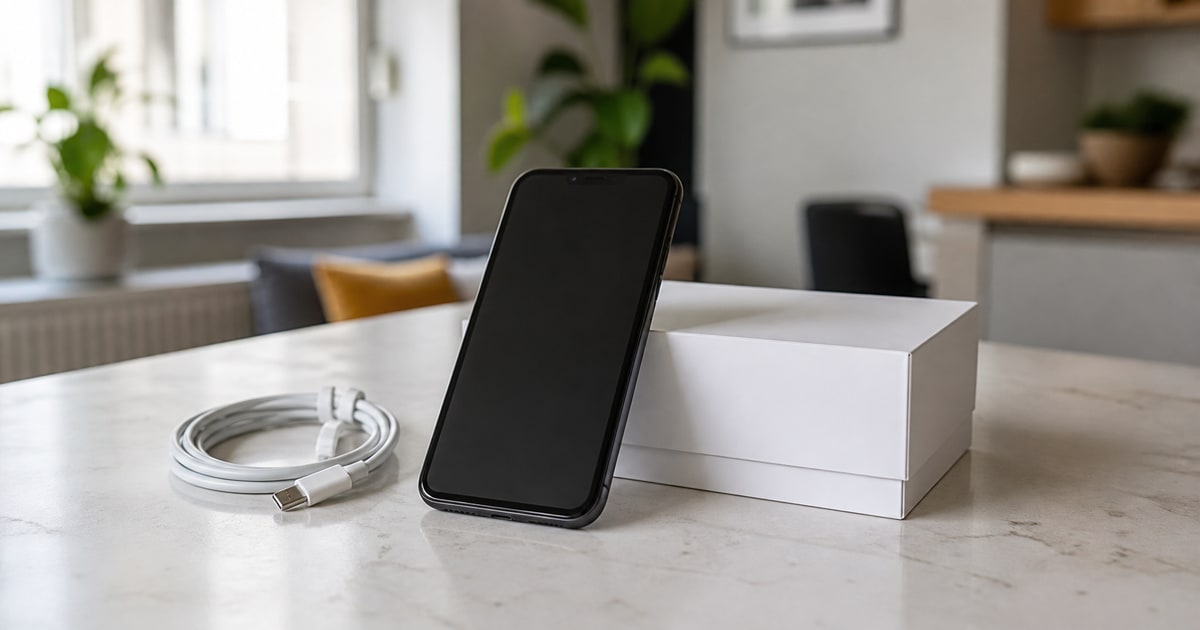
Use a clean neutral surface and soft daylight. Show the powered-on screen, front glass, rear panel, all edges, camera lenses, charging port and included accessories. Photograph scratches at an angle where they are visible rather than using reflections to hide them. A screenshot of battery information can be useful after removing personal notifications and account details. Photograph the box only if its identifiers are obscured in public images. Avoid stock images and excessive filters; buyers are assessing this particular device, and accurate photographs reduce arguments about whether a mark existed before collection.
Price for condition, battery and support life
Compare the same model, storage and network status in current Irish listings. Then adjust for battery health, warranty, repair history, cosmetic grade, missing charger or box, and the remaining software support expected for that generation. A newer budget phone may compete directly with an older premium device, so original retail price alone is a weak guide. Decide whether the asking price is fixed or negotiable. Be cautious of unusually eager buyers offering more than requested, remote courier schemes or messages that move immediately to payment links; those patterns do not increase the real value of the handset.
Use an inspection-friendly handover
Meet in a suitable public place with enough connectivity and time for the buyer to inspect the reset phone. Bring the charger and agreed accessories. Let the buyer confirm basic operation, model and account-lock status while keeping control of the device until payment is independently visible in your own banking or payment app. Cash should be checked carefully; a transfer screenshot is not proof of receipt. For a high-value phone, record the date, model and sale amount on a simple receipt without publicly sharing the device identifier. Remove or close the Local Ads listing immediately afterward.
Turn the preparation into a Local Ads listing
LocalAds.ie gives sellers a direct route to people browsing Irish categories and counties. Choose the most specific category, use original photographs, describe the actual condition and select the contact methods you are comfortable managing. An ordinary listing can appear through relevant browsing and search. Optional paid promotion is clearly labelled and can provide additional visibility, but it does not change organic relevance, replace a fair price or guarantee a sale.
Final seller checklist
A sale-ready phone should be correctly identified, fully tested, removed from every personal account and reset without an activation lock. The public listing should show original photographs, battery and repair facts, included accessories and honest cosmetic condition while withholding serial numbers and private documents. Compare equivalent Irish devices before setting the price, keep conversations on a channel you can review and reject any link that claims to release buyer funds. At collection, allow a reasonable inspection, confirm payment in your own account and only then hand over the phone and accessories.
Tags
More from Seller guides
5 min read
How to Sell Used Luggage and Suitcases in Ireland
Turn an unused suitcase into a clear local listing with measured dimensions, honest wheel and zip checks, useful photographs and sensible collection details.
5 min read
How to Sell a Used Computer Monitor in Ireland
Describe the exact screen, show the ports and stand, explain what you tested and prepare a monitor listing buyers can assess before collection.
5 min read
How to Sell a Dining Table and Chairs in Ireland
Measure your dining set, document each chair, explain extension parts and organise collection so local buyers know exactly what they are getting.