
By Local Ads Editorial Team · Irish Marketplace Guides
How to Sell Used Office Furniture and Equipment in Ireland
Turn a home-office or business clear-out into measured, tested Irish listings for desks, chairs, monitors, storage and equipment.
Published 22 August 2026 · Reviewed 25 August 2026 · 13 min read
Remote-work changes, office moves and business closures can release desks, ergonomic chairs, monitors, filing units and meeting-room equipment that still have years of useful life. The best route is rarely one listing titled office contents. Buyers search by size, quantity, model, adjustment and county, and business equipment may contain confidential data or asset labels. LocalAds.ie lets private and business sellers describe stock accurately, but commercial sellers must identify themselves appropriately and handle invoices, warranties and obligations honestly rather than presenting repeated trade activity as an occasional private clear-out.
Create an asset inventory before advertising
Count each model, colour and condition grade separately. Record desk dimensions, chair adjustment functions, cabinet key count, monitor specification and equipment model numbers. Give every item or matched lot a simple inventory code so photographs, messages and collection records align. Remove products still leased, financed or owned by an employer. For a business sale, retain appropriate internal approval and asset-disposal records. Do not publish employee names, asset-system screenshots, network details or office access information. A clean inventory prevents the same chair or monitor being promised twice.
Remove data and company identity
Securely erase computers, printers, drives, phones, conference systems and smart displays using suitable procedures, and remove storage media when reuse is uncertain. Clear address books, Wi-Fi credentials, print queues and management enrolment. Remove paper from drawers, shredders and cabinets. Asset tags can be removed only with authorisation; keep proof of legitimate disposal. Branded reception signs, security passes and uniforms may create misuse risk and should not be included casually. Data protection is not completed by deleting visible files or performing a quick reset without checking device management and internal storage.
Test adjustments, electronics and keys
Operate chair height, tilt, arms and lumbar controls; inspect bases, castors, gas lifts and frames. Check desks for stability and cable-management damage. Test monitors for lines, ports and stands, and test printers or shredders within safe normal use. Count cabinet keys and show lock operation without revealing key codes. State missing fasteners, damaged laminate, worn upholstery and equipment consumables. A serviced claim should identify what was serviced. For electrical business equipment, do not conceal damaged plugs or cables and seek competent assessment where safety is uncertain.
Photograph lots so buyers understand quantity
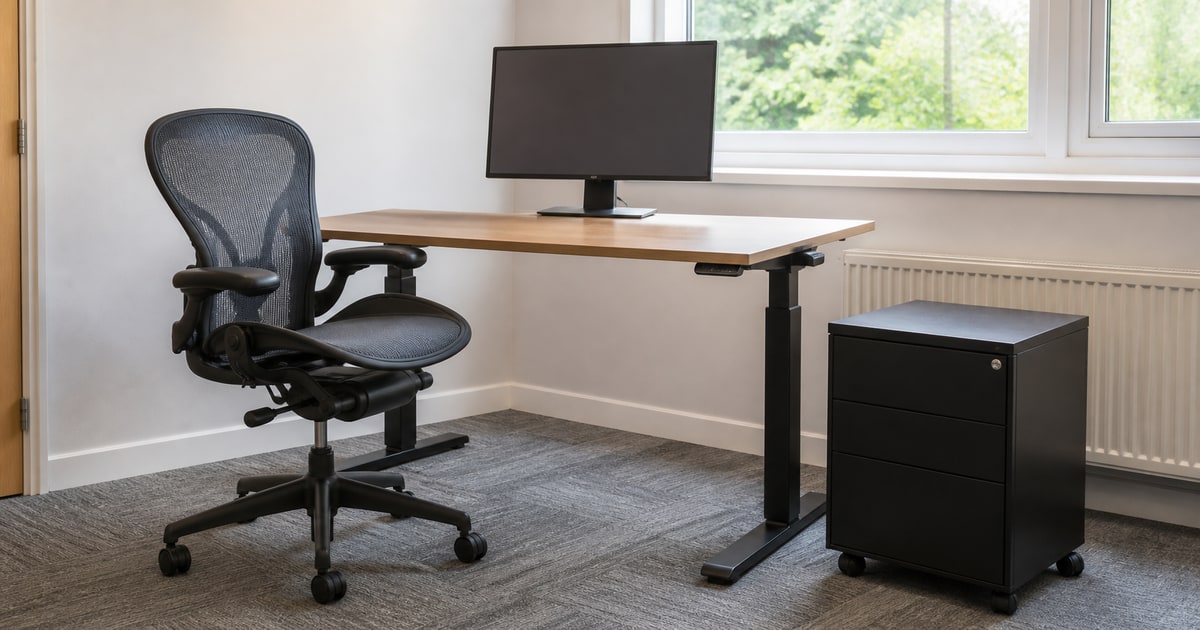
Use one image showing the full lot, then individual model views, adjustment controls, labels with serials obscured, surfaces and defects. For multiple nominally identical chairs, photograph representative condition and disclose the range rather than showing only the best example. Add a written count and dimensions. Clear screens and whiteboards of confidential information, and avoid floor plans, access codes or employee photographs in the background. If an item is dismantled, include an assembled reference photograph only if it depicts the same item and label it clearly.
Choose lot, unit and staged pricing
Research current Irish prices for the same model and condition, distinguishing premium ergonomic brands from generic furniture and private sales from dealers offering delivery or warranty. Set a unit price, a fair quantity price and rules for splitting lots. Selling the best pieces first may leave low-demand remnants, so consider staged release or room bundles. Include VAT position only when applicable and accurate. Optional Local Ads promotion may increase labelled visibility for a business clearance, but it cannot compensate for missing counts, unrealistic pricing or a collection deadline buyers cannot meet.
Schedule controlled commercial collection
Give collection windows, loading-bay access, lift dimensions, parking restrictions, dismantling responsibility and required insurance or site rules before confirming. Remove buyers from active work areas and protect confidential spaces. Label sold lots and have an authorised person check the inventory at release. Large clearances may require professional movers rather than casual lifting. Confirm cleared funds under your agreed method and issue appropriate documentation. Update quantities promptly on Local Ads so later buyers do not travel for stock already removed.
Turn the preparation into a Local Ads listing
LocalAds.ie gives sellers a direct route to people browsing Irish categories and counties. Choose the most specific category, use original photographs, describe the actual condition and select the contact methods you are comfortable managing. An ordinary listing can appear through relevant browsing and search. Optional paid promotion is clearly labelled and can provide additional visibility, but it does not change organic relevance, replace a fair price or guarantee a sale.
Final seller checklist
An office clear-out needs an authorised inventory, secure data removal, tested adjustments and exact quantities. Separate models and condition grades, photograph representative wear and keep confidential screens, labels and access details out of public images. A business seller should use the correct account and seller presentation, describe warranty or return terms accurately and retain appropriate invoices and disposal records rather than making commercial stock look like an occasional private sale. Price units and lots against comparable Irish stock and explain loading constraints, collection hours, floor access and who is responsible for dismantling. Reconcile sold quantities after every appointment and quarantine any device whose data-erasure status is uncertain. LocalAds.ie can reach home workers, startups and established businesses locally; accurate stock updates, honest commercial identity and a controlled collection process turn surplus assets into useful equipment without compromising data or workplace security.
Tags
More from Seller guides
5 min read
How to Sell Used Luggage and Suitcases in Ireland
Turn an unused suitcase into a clear local listing with measured dimensions, honest wheel and zip checks, useful photographs and sensible collection details.
5 min read
How to Sell a Used Computer Monitor in Ireland
Describe the exact screen, show the ports and stand, explain what you tested and prepare a monitor listing buyers can assess before collection.
5 min read
How to Sell a Dining Table and Chairs in Ireland
Measure your dining set, document each chair, explain extension parts and organise collection so local buyers know exactly what they are getting.